




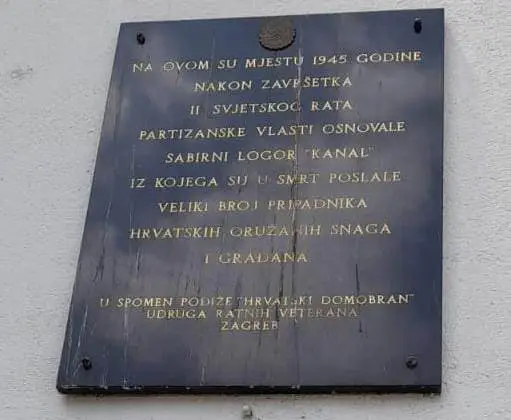
Photo 1. Damir Borovčak, 2023.
Logor Kanal
The Parish of the Holy Family in Zagreb was founded by Archbishop Antun Bauer as the fifth parish in the working-class neighborhoods of Zagreb, which was rapidly developing at the time. The first initiative to build a church at Kanal and Sigečica came from members of the Croatian Peasant Party in August 1933. The foundation stone was laid after considerable difficulties and blessed by Archbishop Coadjutor Alojzije Stepinac on June 27, 1937.
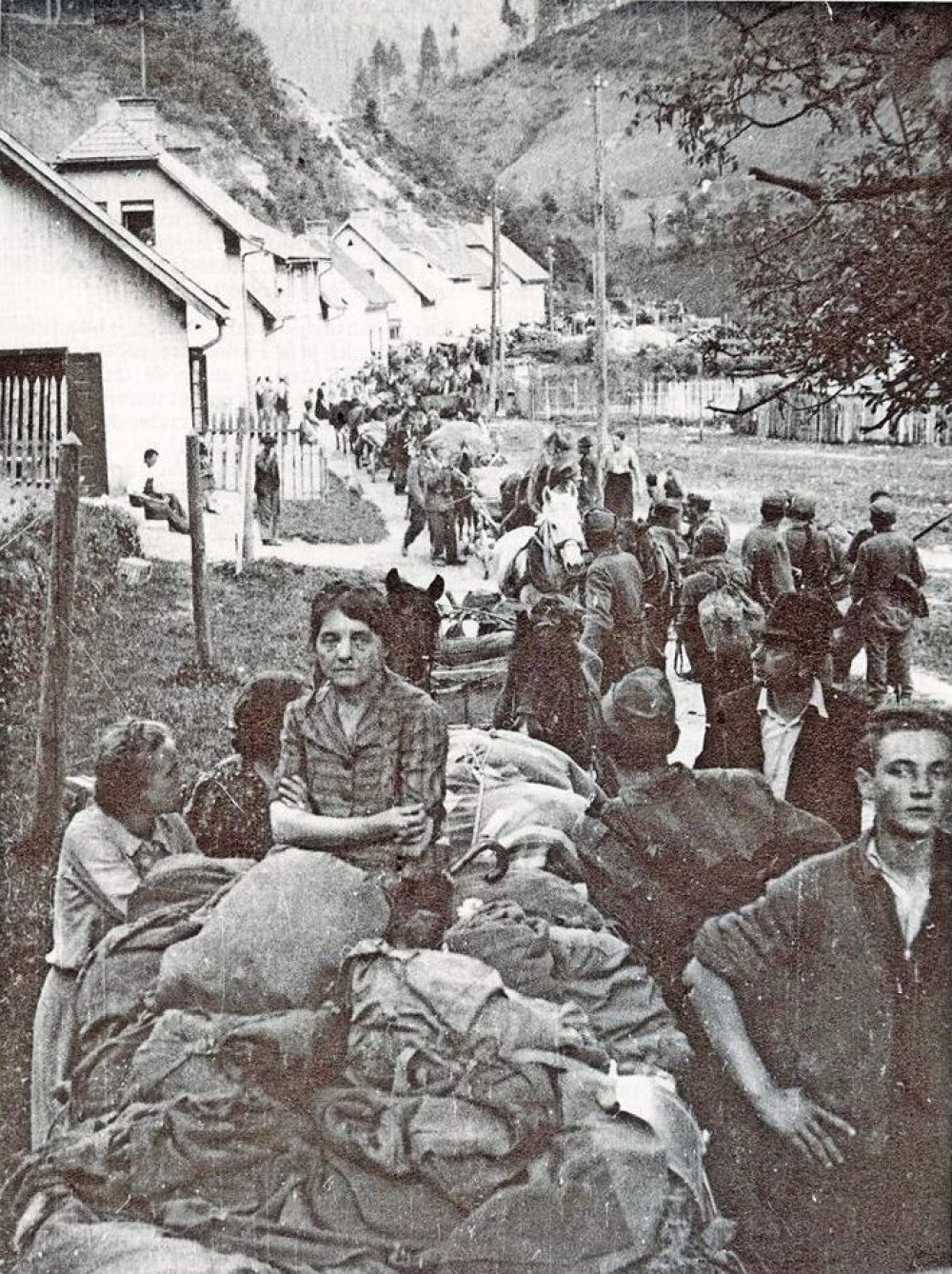
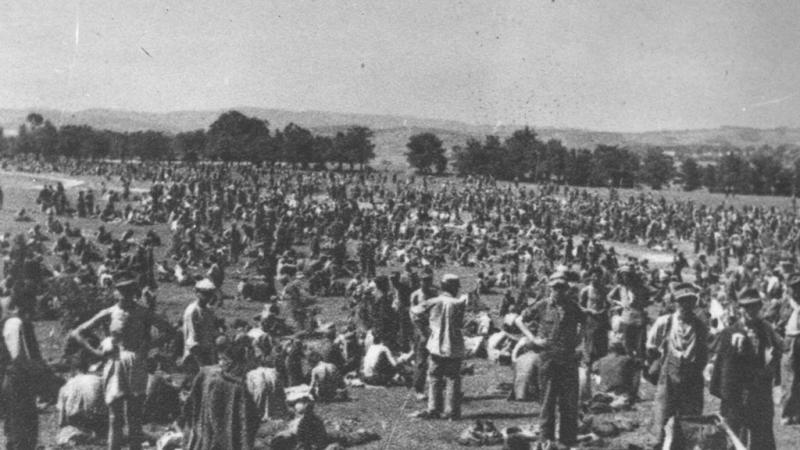
From the history of the Holy Family parish we highlight the events that hit the parish hard immediately after World War II. The first was the arrest of the parish priest Petar Kovačić in 1945 by Tito’s Partisans. The priest was initially sentenced to six years in prison. After the appeal, he was sentenced to death and executed later that year. However, nothing was known about his fate for almost two years. The second event lasted for several months in the area of the parish and in the immediate vicinity of the Holy Family Church. After the Partisan units entered the city in May 1945, the OZNA established the “Camp Kanal” on the site of today’s central bus station. Many arrested Zagreb intellectuals and captured HOS members were brought there, and after May 15 many extradited persons from Bleiburg were also brought. (…) Even today there are witnesses who remember these camp inmates and the arrival of their relatives who were bringing them food, as well as the mistreatment by the guards there. Many of them were tortured and liquidated.
Camp Kanal (today’s bus station in Zagreb) was Tito’s Partisans’ transit camp (for up to 10,000 prisoners of war), from which inmates were sent to other camps. It was run by the 1st Battalion of the 1st Army of the 33rd Division of the 10th Corps. According to the OZNA report of May 12, 1945 to the Supreme Headquarters of the Yugoslav Army, there were 7,000 prisoners and detainees in the Kanal.

Mr. I. Perović recalled that in the military hospital in Šalata, not far from where he lived, “in addition to Germans, Home Guardsmen and Ustasha were also treated, and it is said that there were also wounded Partisans. One day (sometime in May 1945, that is, after the war…) a column of a hundred or more wagons formed, empty, with straw on the floor. We watched and saw the soldiers and medics bring the wounded out of the rooms and put them on the wagons on straw. Then the wagons with several wounded or one, depending on the weight of the wounded, drove in a very long column toward the canal. It was rumored that the wounded were taken to some shacks so that they could take their own wounded to this hospital, formerly opened by the Germans.
The presence of the wounded in the camp by the canal was also confirmed by Josip Pavković, a wounded HOS member, who testified, “The sick were herded into the corridors. I spent two or three days in the hospital corridor. Partisans came, visited the sick and made different comments: that one was a butcher, that one was an Ustasha… On the third day they chased us out and sent us to Camp Kanal (where the bus station in Zagreb is nowadays). Among the wounded were those who were immobile, who had lost their legs or were ill in some other way and could not move. They were loaded into trucks and taken somewhere. I heard that they were killed, but I did not see it. We were in the camp in Kanal for two or three days. It was kind of a clean place, like a playground.”
Murder of the son in front of his mother
From the camp in Maksimir, together with about 200 other Croats, they took me shackled to the camp “Kanal”. I stayed there until June 29, 1945. The regime in the camp was very strict and every building was surrounded with thick barbed wire. On the road between the camp and the residential buildings there was a guard every 50 paces, and at night a patrol constantly passed by there.
One morning, an older woman and a younger woman were crossing this road near the camp. A young ensign called out from the barracks, “Mother!” The woman stopped and waved her hand at her son. The guard then unnoticed pointed a machine gun at the ensign and fired several bullets at him. The young ensign fell dead before the eyes of his mother and his sister, or perhaps his fiancée. The horror of this scene cannot be described. Immediately the alarm was sounded, the guards were reinforced and no one was allowed to leave the shacks or receive the package that day.
The next day the Partisans brought a workman from Zagreb to repair a broken toilet. Three prisoners were assigned to help him. I was among them. We stole his tin snips. He did not get angry and we couldn’t say anything to him. We looked at him sadly and he understood us.
When we left, he said to us, “Good luck!”.
Preparations for the escape – the horror continues
The three of us prepared to escape through the wastewater canal. It was not covered and the wastewater flowed in the direction of the railroad workshops. I knew this part of the city well. We waited for suitable ugly weather. There were only two of us, because the third one was taken out the night before and shot. That third one was named Ivan Herceg, a painter from Zagreb. He was sentenced to death and, as I found out, shot together with the Orthodox Metropolitan Germogen from Zagreb near Stara Ciglana. I remember that place well, because the Partisans said to us prisoners in the so-called “Ustasha” barracks of the “Kanal” camp: “We should not waste bullets on you. We will slaughter all of you in the Faculty of Forestry!”. Stara Ciglana is located directly behind the Faculty of Forestry. On one dark night with rain and wind, at 1 a.m., we crawled out of the barracks, and I, who was the first, made an opening with a pair of tin snips first in the first fence, then in the second, and we fell into a gutter full of deep mud.
A patrol passed by without noticing us. In 5 minutes we reached the last barrack, which was also the most dangerous place on our way. I saw some people coming out of the barrack. I heard the order, “When it’s over, a guard should stay here!” Then they started dragging out people, about 20 of them tied up, into a bunker-like concrete structure. Two men with assault rifles stood at the door and fired several shots. Terrible wailing, cursing and shouts to God could be heard. Again someone ordered, “Fire more!” Then they entered the bunker and fired two or three shots.
There was silence.
I was drenched in sweat from the fright and could not feel my legs and arms. I came to my senses when Luka, my friend who had crawled behind me, pulled on my leg. We crawled on until we reached the last fence at the edge of the larger canal. In a few minutes we would be free. But we remained in shock. This last obstacle consisted of thick iron bars. Our snips were of no use anymore. We unfortunates returned “happily” to our cabin before the lights came on.
I vouch with my life for what is written above.
Ivan Hrvoj
Dalbywagen, Švedska
May 15, 1963
Sources: hkm.hr from December 29, 201929, accessed July 6, 2023
Matković, B. Odvođenja i likvidacije ranjenih pripadnika Hrvatskih oružanih snaga (HOS) iz zagrebačkih bolnica u svibnju i lipnju 1945. kroz arhivsko gradivo Državnog arhiva u Zagrebu. Arh. vjesn. 54(2011), pp. 179-214.
John Ivan Prcela, Dr. Dražen Živić, Hrvatski Holokaust, Zagreb, 2001.
Photos: Damir Borovčak
Editorial/crimesofcommunism.net