




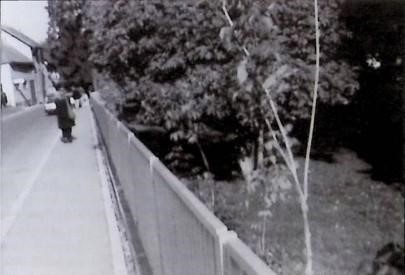
Garden in Mlinska St., photo by M. Zdunić
Camp Park in Mlinska St.
Mlinska Street got its appropriate name after the mills and water mills on the Gradna River (mlin means mill, t.n.). In this street, on the right bank of the Gradna, there used to be four mills, Bezjak’s, Zokalj’s, Bradač’s and Horvat’s. Between Žokalj and Bradač there is a meadow. Today the kindergarten “Grigor Vitez” is located there. They called it “Park in Mlinska St.” The garden was always well attended and cheerful. Locals from Samobor love greenery, so they eagerly cared for this garden.
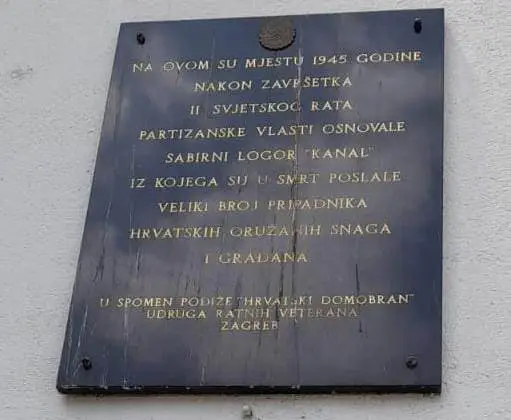
And what happened to the beautiful park in 1945? What did Tito’s Communists do with it? They turned it into a camp.
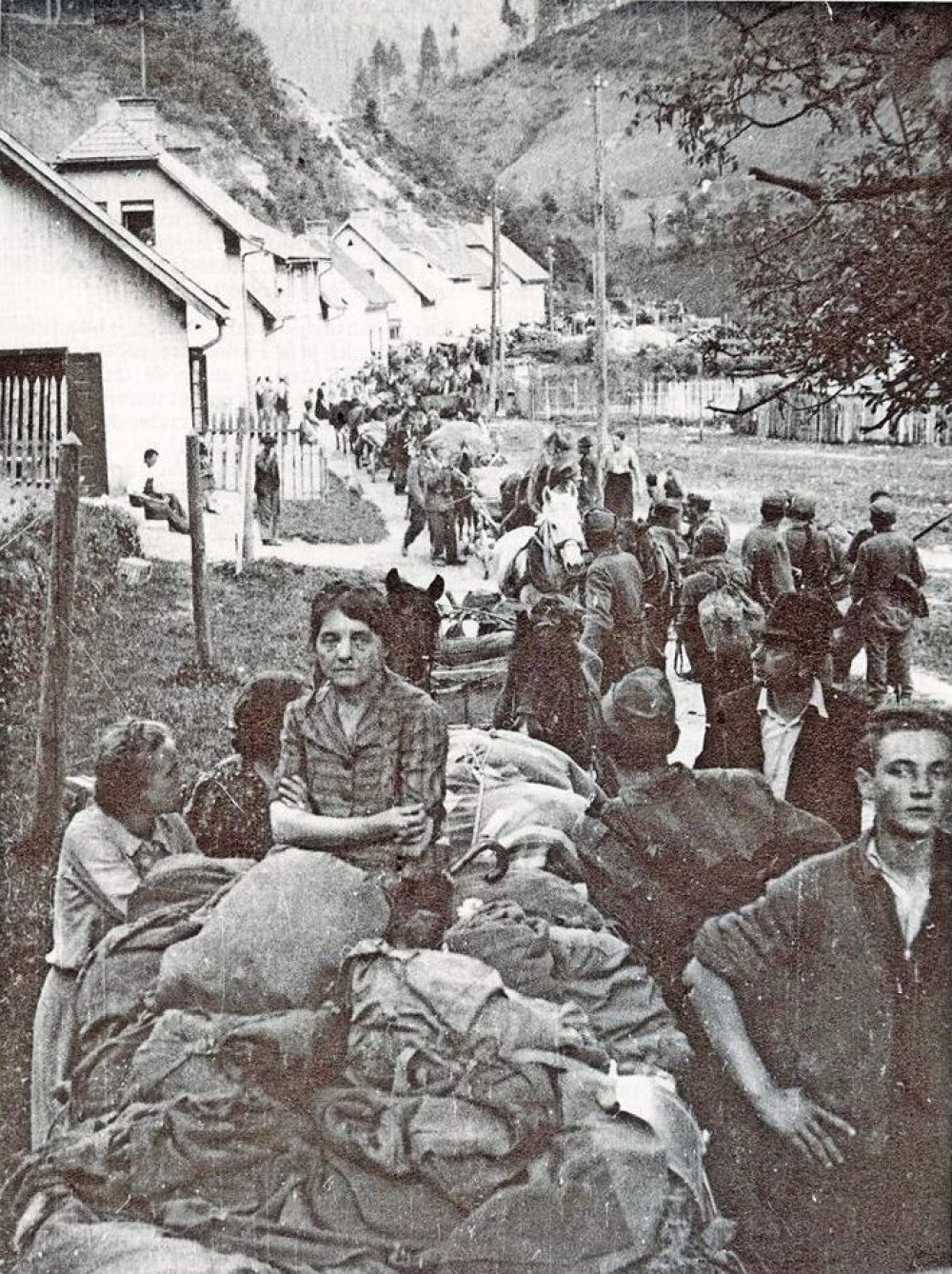
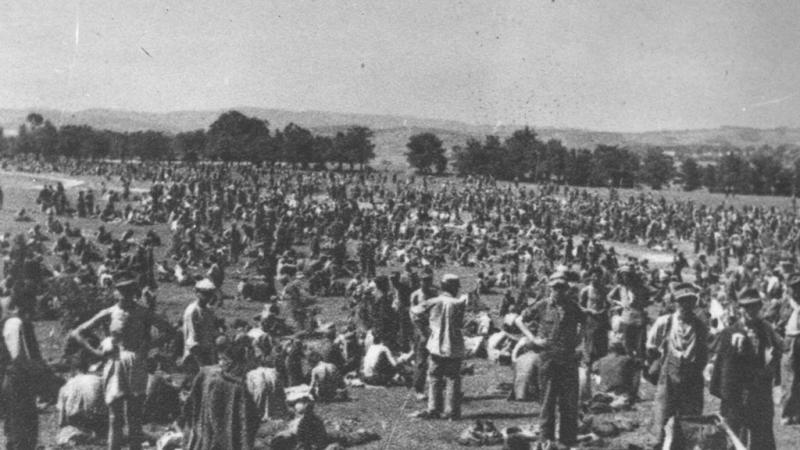
Trenches and ditches were dug in a zigzag pattern around the camp. The camp was surrounded by barbed wire. It was guarded by Partisan guards. More than a thousand people were imprisoned here. It was a very crowded camp. They brought people daily from everywhere. They were mainly from Slavonia, but also Samobor. They were all hungry, thirsty, tired and scared. They were also tortured physically and psychologically.
One could only hear orders, “Lie down! Get up! Take off your clothes! Lie down on the bench!” Then a dull thud could be heard… “Get up! To the commissar for interrogation!” The most difficult part was the psychological torture. Everyone was afraid of being led to their death. At night, some were taken into the unknown. Some were shot in the camp itself.
Those who wanted to quench their thirst in the Gradna River were killed. The camp inmates abstained, although they were hungry and exhausted. They tore the bark from the trees, crushed it and ate it. The gardens were literally bare. The trees no longer had bark, so the gardens looked spooky. Sometimes the prisoners had some brighter moments. Little girls from Samobor brought them food in baskets. Surprisingly, the guards did not disturb them. The miller Bradač from the neighborhood threw bread to them over the fence in the morning and in the evening.
A survivor of the camp tells me:
“That evening there was a shooting. On that occasion I fell unhurt into a zigzag ditch and survived. After that, I saved myself by running away. Later I would be arrested again and spend eight months in forced labor.” Most of the prisoners were taken to the “Way of the Cross.” Some returned home alive.
One girl, now an elderly lady, brought food with her peers to the “Park in Mlinska” camp in 1945. She reminisces and says: “One day we brought food in baskets, but we found the camp empty. There were no more camp inmates. We were sad. We took home full baskets of food. We were worried because we did not know what happened to those we had fed and whose fate we worried about.”
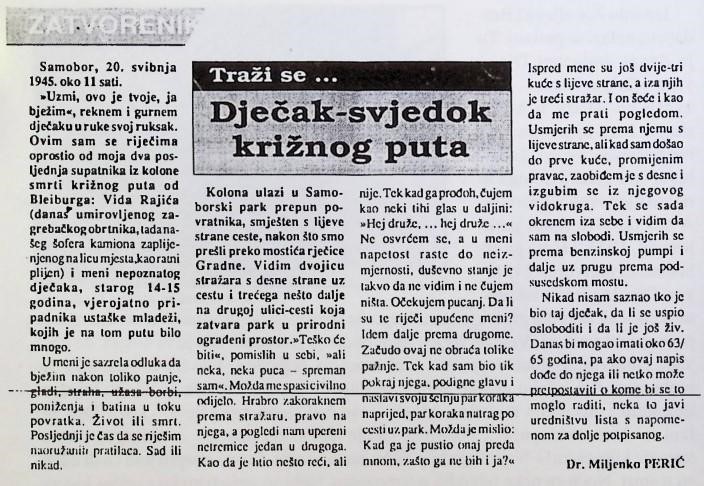
Editorial/crimesofcommunism.net