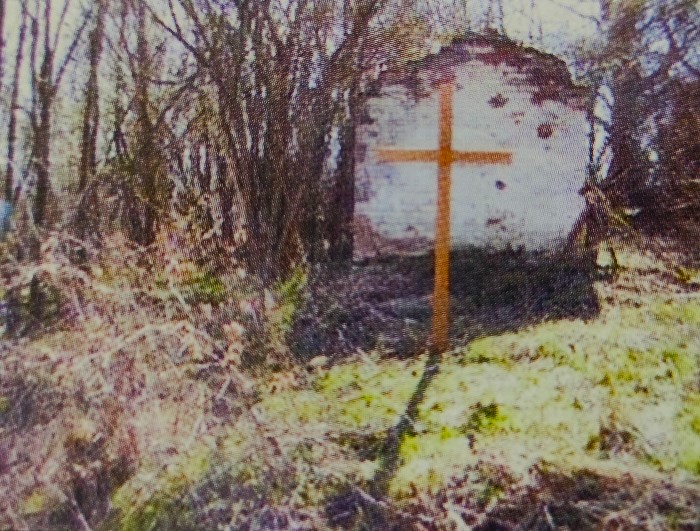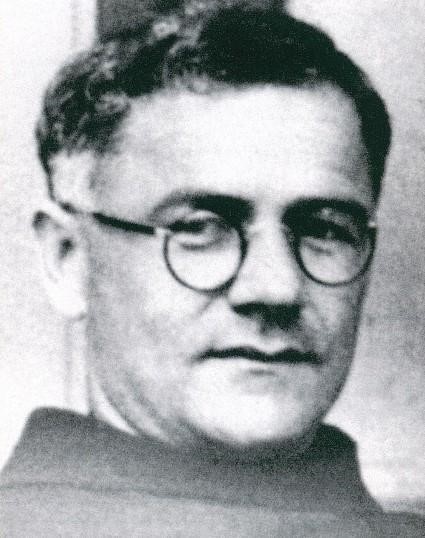



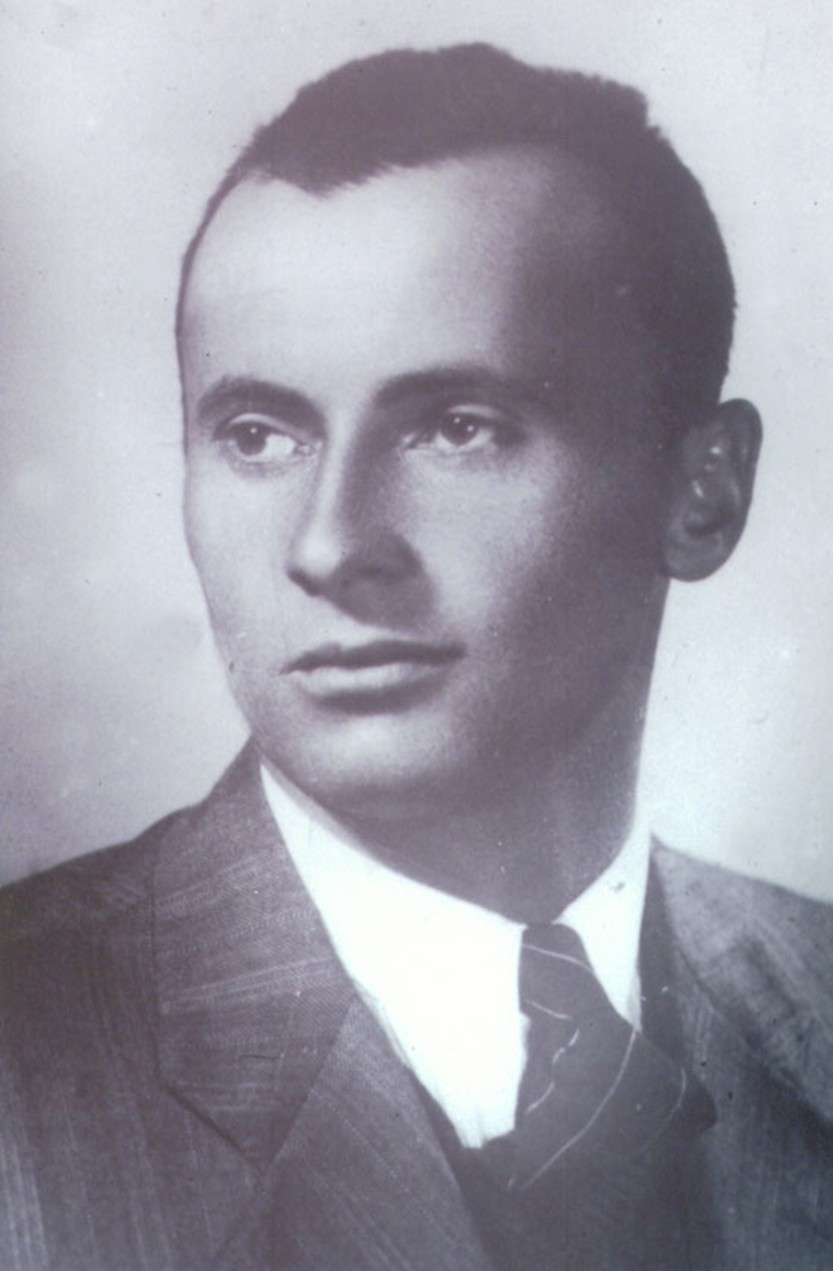


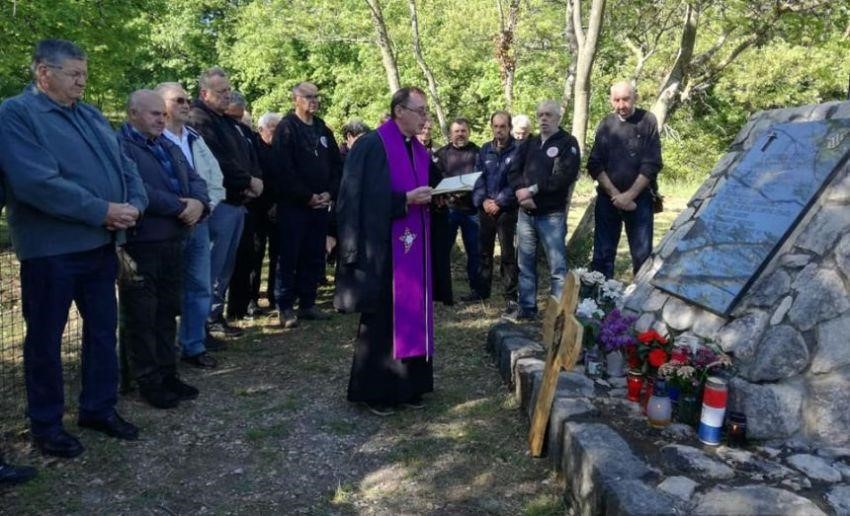
Prayer in 2019 for the executed first parish priest of Sušak, Rev. Martin Bubanj, at the pit
Pit Bezdan – Rijeka
The pit Bezdan (Abyss) is merely another of several hundred pits into which Tito’s Partisans were throwing their victims after a brutal killing in the name of communist ideology. Between 500 and 1,500 men, women, elderly people and captured soldiers lost their lives in the pit Bezdan, tragically and without trial and proof of guilt. Final number will be determined when the exhumation of these victims is carried out and they are buried with dignity. The parish priest of Sušak, Josip Manjgotić, the successor of the executed pastor Martin Bubanj, did not allow this large execution site to fall into oblivion.
This was first talked about only after the break-up of the former Yugoslavia. Access to the area was banned, as it was the site of the Yugoslav army. After the terrible massacre, the pit was covered up with various garbage, later also with waste material from “Vulkan” (a local factory). Even today, when you come to Bezdan and spread out the earth, at a depth of a few centimeters you will come across a black substance of powdery structure.
The first claims about this terrible tragedy were followed by the reactions of local Partisans from Kostrena. First they said that cattle were thrown there. After that, they said that there were executed people after all, but that they were primarily Germans that did not want to surrender, and a couple of local traitors.
Still, the truth seems to be somewhat different, mainly thanks to persistent work of Josip Manjgotić, the successor of the executed pastor Bubanj. For years, even in the tough times, every year on the day of Bubnjar’s execution, 27 April, he celebrated a memorial mass for him in the parish church. For years, he also quietly collected information and documents about Martin Bubanj and the statements of various witnesses.
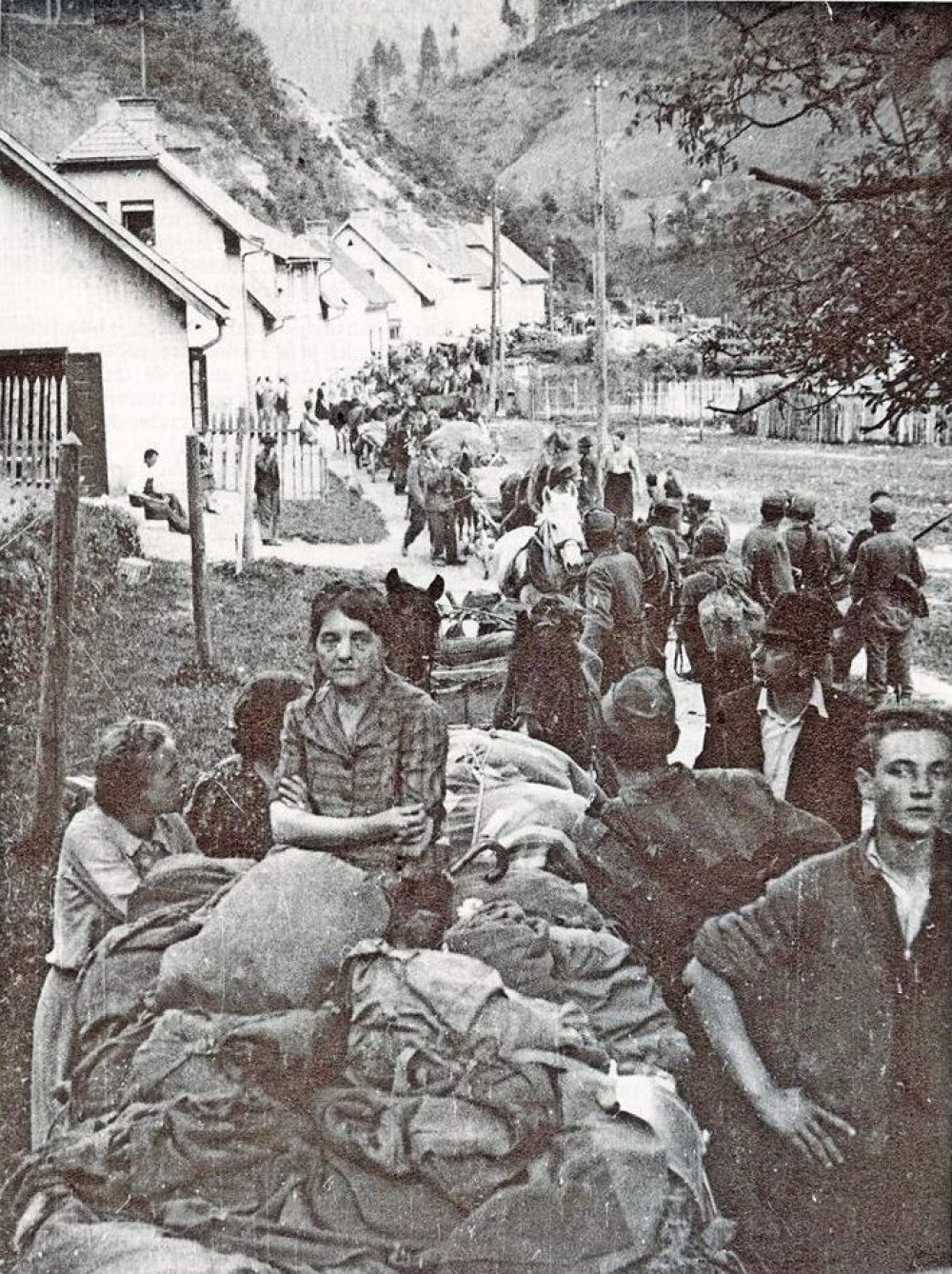
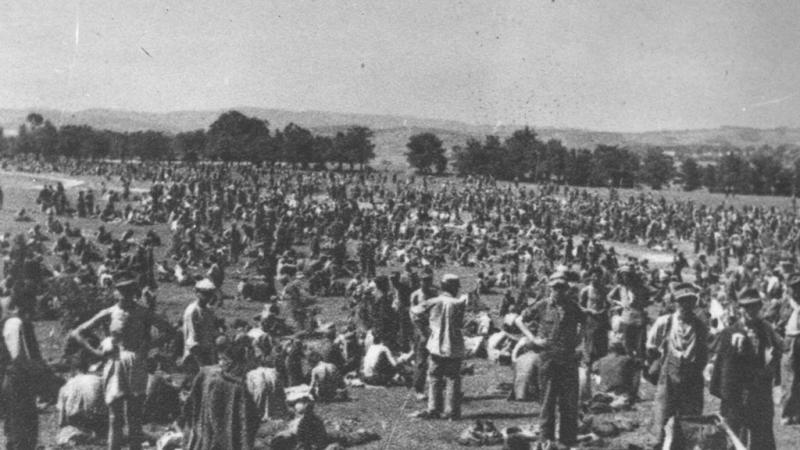
Our elderly people were saying that the colon of the executed was as long as the distance between Rijeka and Kostrena, that is, more than 5 kilometers. Some were transported by trucks. The gathering took place near the old school building, which is today the Kostrena Municipality building. There, people were guarded until dusk, and then tied with wire, led to Brezdanka (another name for Bezdan), tortured and killed. One man managed to escape with his life after one of the Partisan captains singled him out of line because he was a baker. For years, corpses appeared on the beaches of Kostrena, but the question is whether really the victims of the Bezdan or something else emerged.

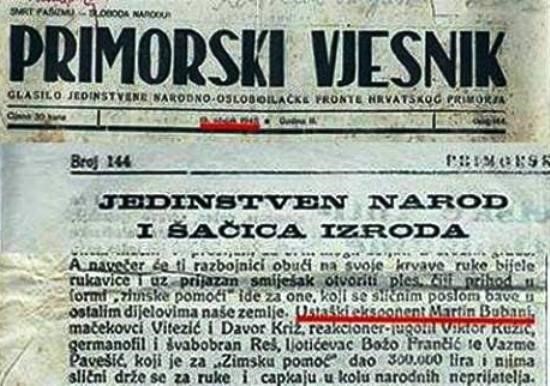
After the Partisans entered Sušak on 21 April 1945, the parish priest Bubanj was immediately among the first to be arrested and taken to a school in Kostrena, where he was detained for several days. He was shot and thrown into the Bezdan pit in Kostrena, most likely as early as 27 April of the same year. An indictment was subsequently filed against him by the Military Court in Ogulin, compiled by a certain Benedetti in May 1945, after pastor Bubanj had already been executed! The indictment alleges, among other things, that as a “supporter of the Independent State of Croatia” he held “conferences with Bishop Srebrnić, Krešo Vranić and other Chetnik and White Guard leaders”, that he “sympathized with Anglo-Americans”, but “did not agree with the Ustasha movement which he criticized and ridiculed”. In addition, he was “very smart and intelligent, kind and good to people, so everyone loved him. He helped everyone, and he even got the Partisans out of prison. That is how he wanted to hide his real work.”
Martin Bubanj (Križiće/Mali Dol, 12 November 1898 – Kostrena, 27 April 1945), parish priest and religious teacher, left a letter for his parents:
Dear parents!
I do not know what will happen with me… whether I will go somewhere or nowhere at all.
The situation is very difficult. My soul has no burden, I did no harm to anyone, to whomever I was able to help, I helped.
How much time I lost going around different offices to help people. Still, I hear they threaten me, write against me in their newspapers etc.
If I stay and perish, do know that it is because I am a Catholic priest who preached and defended his faith, who was not a priest only to celebrate Mass and collect money, on the contrary, when it was necessary to defend the faith, I did so boldly. Furthermore, because I always felt like a Croat, I always felt for Croatian people and helped those people whenever I could.
I caused no harm to anyone, I worked only for my faith and my people. Let everything else be in God’s hands.
If I perish, please do not weep at all, you even have to be proud that I merited to die for God and faith. If I decide to travel, I will come back when the situation calms. It could happen soon, but it could also take a long time. Only God knows. Pray to God for me, only He will guard me.
Love and greetings, your Tinko.

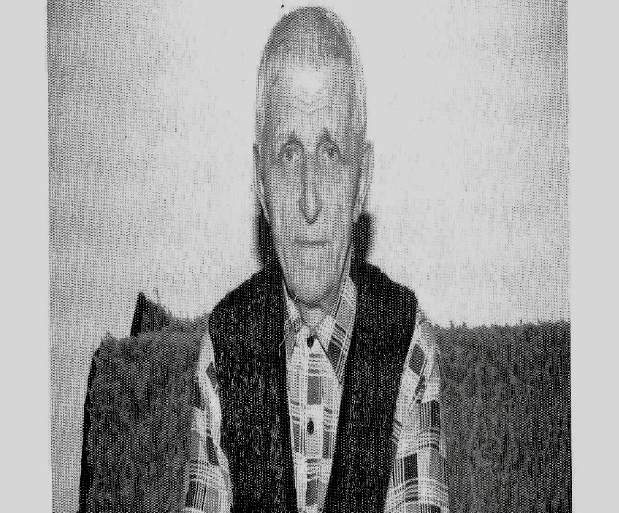
During the years of research, pastor Manjgotić even managed to find out about the direct perpetrators of this crime: “One of the perpetrators is still alive, and two have died. I have talked to him, but when the conversation changes to this topic, he will not say anything. He was then in his twenties” (Na Sušaku podignuta prva spomen-ploča žrtvi komunističkog nasilja u Hrvatskoj (The first memorial plaque to the victims of Communist violence in Croatia erected in Sušak), “Novi list”, 18 May 1995, p. 5). Emil Kratil, a master for pianos, who was first deployed to an execution group in 1945 and then released at the pit itself, many years later described the encounter with one of the executors at the pit Bezdan: “I am recounting this to you because today I felt nauseous seeing one of the Kostrena Partisans coming to the family where I was called for piano tuning” (“Zvona”, Rijeka, April 1995, p. 4). Lucija Cibić from a hamlet Šodić near Kostrena happened to be near the execution site and saw Bubanj’s execution: “We women went there to see. And we saw them still alive when they were brought to the pit. We hid behind a spruce tree, at a distance, not too close. We saw that they brought two people and placed them by the pit. They were brought by the Partisans. First they interrogated him, then they stripped him and gave him a prayer book to pray. I saw him like this, from a profile. The lady wanted to scream. We could not do anything for fear of being thrown into the pit. And so we spied on them from the bush.
Then they shot the Reverend here (shows the back of the head) and threw him into the pit. And later they did the same with the lady, a beautiful lady, 50 years of age at most. Then we ran away with the cattle” (“Zgrušana krv do gležnja”, “Večernji list”, 1 September 1990, p. 10).
Srećko Fužinac, head of the former investigation center of the Commission on Establishment of Wartime and Post-war Victims for the former municipalities of Delnice, Crikvenica, Čabar, Krk, Mali Lošinj, Opatija, Rab, Rijeka and Senj, described the entire Partisan process: “They gathered people at the Kostrena school and in a villa in Sušak, from where they were then taken in columns in several turns to the Kostrena pit Bezdan, their execution site. According to witnesses, several hundred people tied with wire were brutally slaughtered and shot while screaming and moaning… Access to the pit then and long after it was forbidden. Later it was mined, covered up with limestone and then became a regular landfill” (“Na Sušaku podignuta prva spomen-ploča žrtvi komunističkog nasilja u Hrvatskoj”(The first memorial plaque to the victims of Communist violence in Croatia erected in Sušak), “Novi list”, 18 May 1995, p. 5).
Among other things, Fužinac stated: “While the perpetrators of this terrible crime in Kostrena, post-war Partisans – whose names are known, and it is also known that they were not Croats – received and honours and lived with them, meanwhile their victims were humiliated and their terrible grave was turned into a dump” (ibid., p. 4). An elderly woman, Antonije Kerner, also remembered those nauseating days: “In the middle of the summer, for the full five days and nights, shots were echoing by the pit. Then the shots stopped, but one could hear calls for help…” (“Večernji list”, 25 August 1990, p. 10).
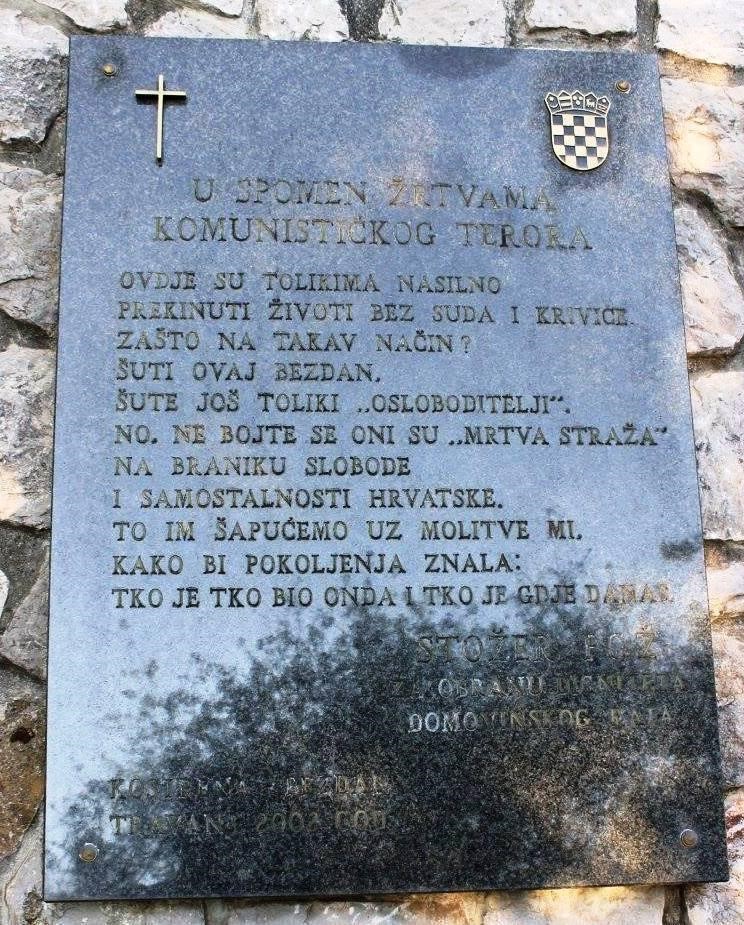
In 2002, a handful of people erected with their own hands a monument to the victims of Partisan terror, without any financial assistance from the state or the municipality. After the completion of the monument, a pilgrimage was organized. It was a sunny and hot day, the procession gathered in front of the Municipality building and headed on the way of the cross to Bezdan. There were young and old, children, women, elderly women in black who prayed and cried… Josip Manjgotić celebrated a wonderful mass: “We came here with awe because every grave is a holy place for us believers. This pit is soaked in the blood of many, but also with the hatred that still floats in the air, which we felt last Sunday. Crimes never become obsolete, and so the abominations committed in this place are sins crying to heaven, whether they belong to the red or black. However, for our state, crimes are not equal, because only Nazism and fascism were condemned, but not communism – as Europe and the world did. We are here as supplicants, not prosecutors and investigators, which should be the job of others. “
Sources: Zvona, Rijeka, April 1995, p. 4
Večernji list, 25 August 1990, p. 10
Večernji list, 1 September 1990, p. 10
Editorial/komunistickizlocini.net