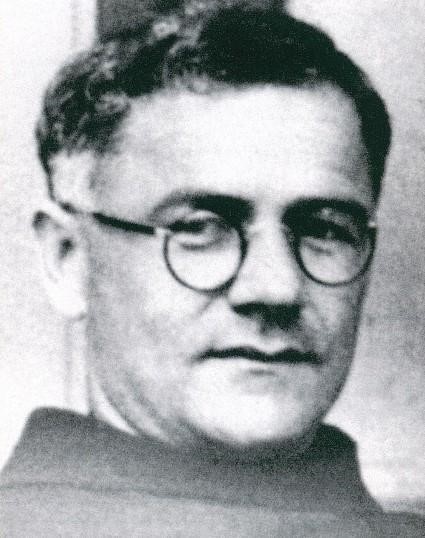



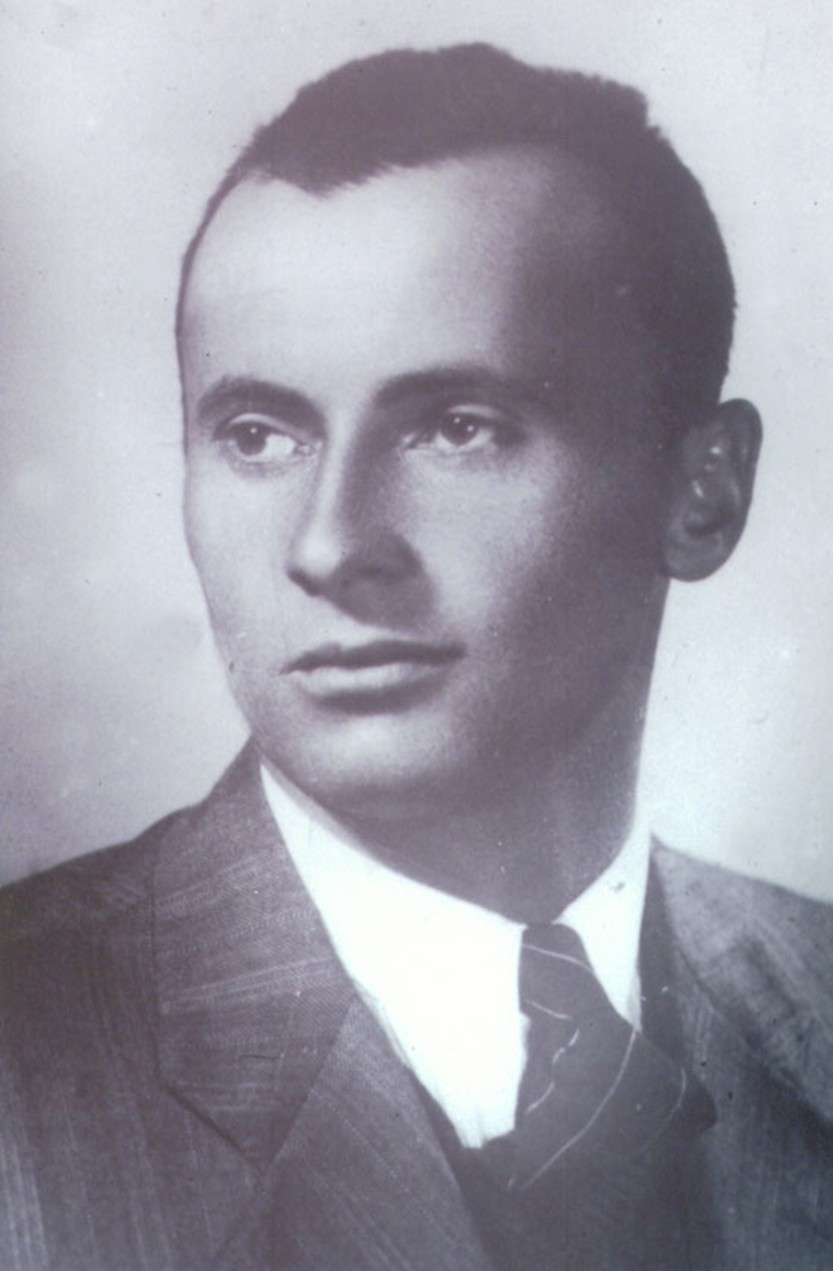


Croatian emigrant Drago Jilek disappeared on March 16th, 1949.
Drago Jilek
Croatian emigrant Drago Jilek disappeared mysteriously on March 16th, 1949 in Rome. The content of Jilek’s file, stored in the Croatian State Archives, reveals the real truth about his fate. Jilek was abducted in Rome and brought to Belgrade, where he was detained, tortured and interrogated for many years by the Yugoslav communist regime. Jilek was to be the crown witness against Andrija Hebrang. When he did not agree to that, he was executed without trial! Ivica Krilić, Jilek’s associate and emigrant in Rome, said: “Speaking of this, I can say that one of the three OZNA agents who abducted Jilek was Budimir Lončar, later the Minister of Foreign Affairs of the former Yugoslavia. After that abduction, Lončar was promoted to the head of OZNA in Zadar.” The data was collected by the Commission for the Investigation of War and Post-War Victims, whose members testified at the trial of UDBA agents Josip Perković and Zdravko Mustač, charged with killing Croatian emigrant Stjepan Đureković.
After the end of World War II, as one of the most trusted and reliable communist employees in Zadar and its surroundings, Lončar was appointed head of the District Department for People’s Protection (OZNA), the secret communist police in charge of investigating “enemies of the people”. The communists secretly referred to the executed “enemies of the people”, who were thrown into the sea, as an “underwater battalion”.
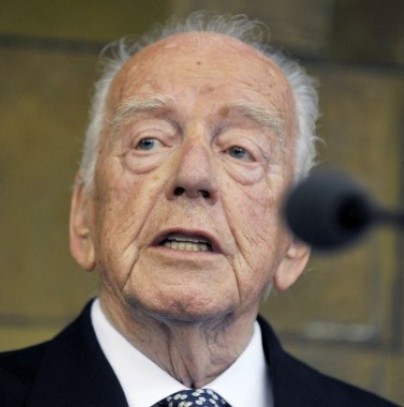
Even though he never finished high school, Budimir Lončar became the head of the infamous OZNA in Zadar, and later he served as a Yugoslav diplomat and federal secretary of foreign affairs. Subsequently, he was a foreign policy adviser to Mesić and Josipović. He represented Yugoslavia in the negotiations that resulted in the introduction of an arms embargo on Croatia, consequently making it very difficult for Croatia to arm itself in the Homeland War. The Mayor of Zagreb, Milan Bandić, attempted to decorate this man, but fearing that his dirty past would rise to the surface and attract great media interest, Budimir Lončar decided to decline the honor and thus prevent further media scrutiny!
Abduction of Drago Jilek
Drago Jilek was born on May 2nd, 1912 in Sarajevo. As an ardent patriot, he was at loggerheads with the Yugoslav authorities from a young age. He was arrested in 1939 for distributing anti-Yugoslav pamphlets. After his release from detention, he continued his law studies at the University of Zagreb, where he faced the start of the war.
Immediately after the founding of the Independent State of Croatia, he went to Sarajevo, where he became Deputy Commissioner for Bosnia and Herzegovina. In late 1941, he became the commissioner of the Supervisory Service (UNS) in Zemun, then the commissioner of the UNS Office II in Sarajevo, and finally the head of the IV Department of the UNS Office II (anti-communist department) in Zagreb. After the dismissal of Dida Kvatemik, he became the commander of the UNS in the rank of major, but he was soon relieved of his duties
At the end of the war, Drago Jilek retreated to Austria with the NDH army; he managed to survive the Bleiburg tragedy and took refuge in Italy. When Božidar Kavran started to organize crusade groups (Operation April 10), Jilek was tasked with selecting officers who were to return to the homeland, organizing the Croatian intelligence service and establishing contact with foreign intelligence services, primarily American. Jilek spent most of his time traveling between the refugee camps in Austria and Italy.
After the failure of the operation April 10, Jilek withdrew to Rome, from where he mysteriously disappeared on March 16th, 1949. All that was left of him was a pool of blood on the sidewalk in front of his apartment at 43 Via XX Setembre, Magiorato, Rome. Jilek had no property at the time. Everything he owned fit in the pockets of his pants: Italian documents with a fake name, a watch and a few gold coins. As an old and experienced conspirator, he carried most of his wealth in his head. The full truth about Jilek’s fate remained completely unknown until recently. He was only occasionally mentioned by Yugoslav authors, such as Mile Milatović and Vladimira Dedijer, who, accusing Andrija Hebrang, referred to the contents of the so-called Jilek’s purse, and hinted that UDBA played a role in Jilek’s disappearance.
On the other hand, UDBA’s propagandist, Vjesnik journalist Đorđe Ličina, stated in his book “Dvadeseti Čovjek” (Twentieth man) that Jilek fled to Italy before the collapse of the Independent State of Croatia, then to Austria, and then moved to Argentina. According to Ličina, he was killed in exile by his associates. However, the contents of Jilek’s file reveal the truth about his fate. Jilek was abducted in Rome and brought to Belgrade, where he was interrogated and then executed on an unknown date. The dossier includes, among other things, Jilek’s statement, which he gave under the pseudonym Drago Duvnjaković on March 8th, 1950 in Belgrade.
Ivica Krilić, Jilek’s associate and emigrant in Rome gave an interview to the weekly “Globus” on January 13th, 1995, when he stated:
“Speaking of this, I can say that one of the three OZNA agents who abducted Jilek was Budimir Lončar, later the Minister of Foreign Affairs of the former Yugoslavia. After that abduction, Lončar was promoted to the head of OZNA in Zadar.”
It is possible that this operation was a fine springboard for the later career of Budimir Lončar, born on April 1st 1924 in Preko near Zadar, who we remember as the last Minister of Foreign Affairs of the SFRY, even though he never finished high school.
It is evident from Drago Jilek’s file that one of the most important reasons for his abduction was the intention of UDBA’s bosses to find out the truth about Andrija Hebrang’s detention in the Ustasha prison. Jilek first claimed that he had no personal knowledge of Hebrang’s alleged consent to co-operate with UNS. However, in the aforementioned statement of May 8th, 1950, Jilek testified about his alleged conversation with his former student colleague, Vice Barić, who in the meantime, had become an U.S. Army intelligence officer based in Italy:
“I told him about my intelligence work on the anti-communist line during the NDH. Having briefly mentioned the cases of the ‘Provincial Committee for BiH’ and the ‘District Committee in Mostar’, I also told him about the case of Andrija Hebrang and his friend in the context of an exchange. I told him that several months before the exchange Andrija Hebrang obligated Viktor Tomić, so to speak, to work for UNS if he was released. That was the real reason why the exchange of Andrija Hebrang’s was agreed. On the order of Dido Kvaternik, the entire Andrija Hebrang case was reviewed by Viktor Tomić. I told Barić that I did not know whether Hebrang fulfilled his ‘obligations’, because I was relieved of duty shortly afterwards. My subsequent conversation with Viktor Tomić took place in the presence of Andrija Juratović.. Viktor Tomić answered the same question: “Do you think that Viktor Tomić would be deceived?” I told Barić that most of the others, who were exchanged with Andrija Hebrang for Vutuc and Wagner, had signed a commitment to cooperate with UNS. Barić was especially interested in the case of Andrija Hebrang, and he said that he would tell his boss about it immediately… I remember that Vice Barić once had a meeting with Viktor Tomić. That could have been in February 1946.”
The question of the veracity of Jilek’s statement will certainly be questioned for a long time to come, given the conditions under which he made it, but we can consider it unquestionable that it had a significant impact on Hebrang’s fate in Glavnjača.
It is also obvious that the Western intelligence services were very interested in Andrija Hebrang. Given the interest of the American secret service in Viktor Tomić, who mysteriously ended up in a British prison, their role in this case is yet to be investigated, keeping in mind the unquestionable support Tito had from the West in the conflict with Stalin.
Source:
Anto Kovačević, A Man and His Shadow, Zagreb, 2012
Bože Vukušić, UDBA’s Secret War Against Croatian Emigrants from BiH, Zagreb 2002
Editorial board/crimesofcommunism.net