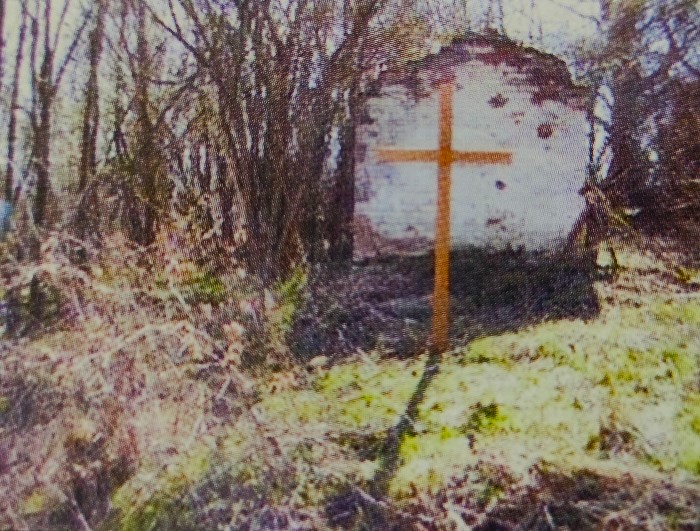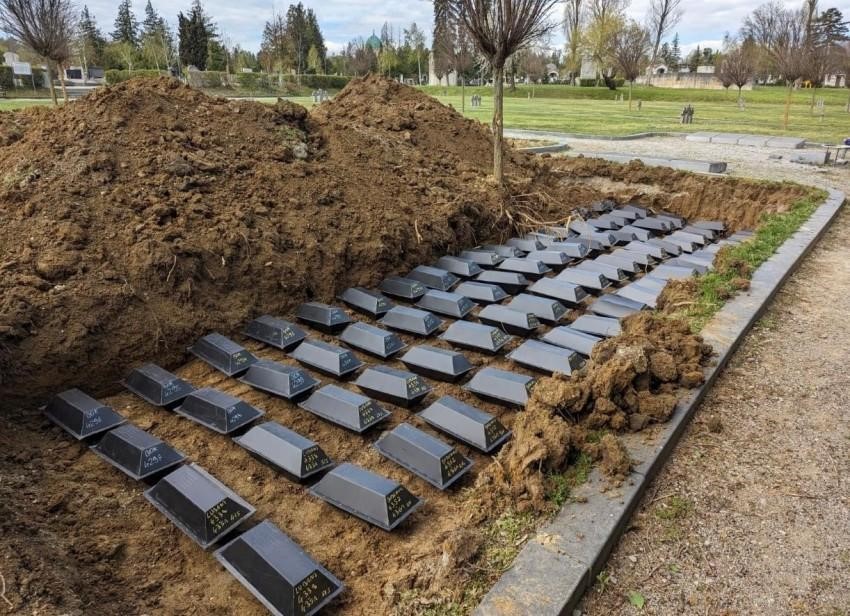





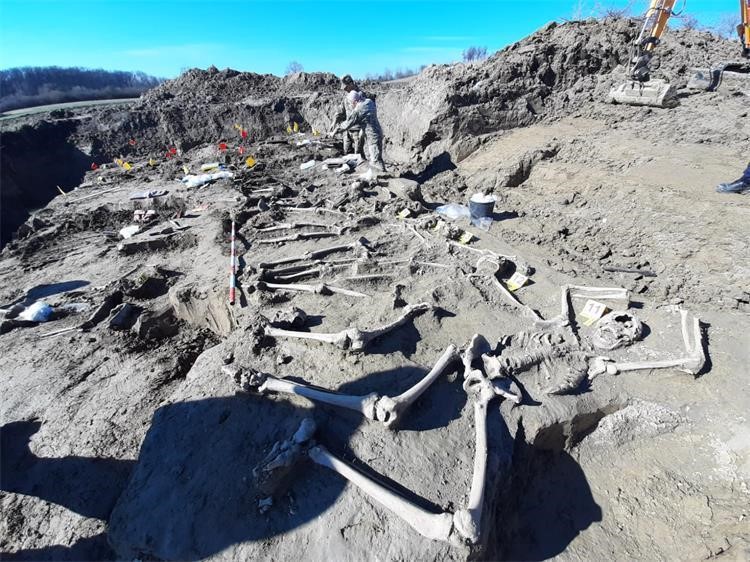
Exhumation of the remains in Garešnica in 2020. Photo 6 – Ministry of Croatian War Veterans
Tomašica – Garešnica
Based on the information gathered about the possible gravesite of the victims of the World War II and the post-war period, the Directorate for the Imprisoned and Missing of the Ministry of Croatian War Veterans conducted an extensive field research and exhumation at the Tomašica site, Garešnica, from 24 February to 16 March 2020. Already on the first day of the test excavations, the remains were found, and the County State’s Attorney’s Office for Bjelovar obtained a warrant from the competent investigating judge of the Bjelovar County Court to conduct the exhumation. Previously collected operational information of the competent interdepartmental services indicated the existence of a mass grave of victims of Tito’s regime from World War II.
The inspection of 546 m2 of land confirmed the existence of a mass grave. The dimensions of the gravesite, i.e. its area of about 180 m2, was determined in the initial phase of the work, and the gravesite was treated according to all the rules of the profession.
Taking into account the specificity of the location, i.e. the extremely alluvial soil, the plan for treating the gravesite was divided into three phases of work. The first phase consisted of determining the perimeter of the gravesite, the second phase consisted of preparing the gravesite and the remains for their individual removal. The third and final phase was exhumation.
In three weeks of work, the remains of 57 people were exhumed, and their examination revealed that 53 of them are victims from World War II killed by Tito’s Partisans, while four of the remains do not fall under the jurisdiction of the Ministry of Croatian War Veterans.
Anthropological analysis of the remains of 53 persons showed the following:
It was possible to determine the sex for 52 people, namely that there were 47 males and 5 females, whose age range was from 14 to 60 years. The most represented are young and middle-aged people. Among the victims, there were seven adolescents and two over 50 years of age.
Damage that occurred at or near the time of death is reported on the bones of men: gunshot wounds are visible on four skulls, fractures caused by blunt-hard force are visible on five skulls, and fractures are visible on the long bones of the legs of four people.
The whole process during the three weeks of work was guided by interdepartmental cooperation. The criminal police service of the Bjelovar-Bilogora Police Administration conducted a classic police investigation daily. The example of treatment of the mass grave in Tomašica shows the importance of the coordinated interdepartmental cooperation between the Ministry of Croatian War Veterans, the Ministry of the Interior, the State Attorney’s Office, the City of Garešnica, the local parish in Tomašica and the Garešnica branch of the Croatian Home Guard Association. During the field activities, in cooperation with the criminal police, interviews were conducted at the location with the locals who had information about the events of that time.
The Law on Investigation, Arrangement and Maintenance of Military Cemeteries, Cemeteries of World War II and Post-War Victims prescribes the construction of a grave site within a city or local cemetery so that exhumed remains of Tito’s Partisans’ World War II and post-war victims can be buried in a dignified manner and permanently. Assistant Minister Sučić and Mayor Bilandžija reached a general agreement on the construction of the tomb.
Also, field activities included field investigations in the wider area of the neighboring municipality of Berek. During the investigation, the locations of possible mass graves of the victims of World War II and the post-war period were visited and they were photographed from the air.
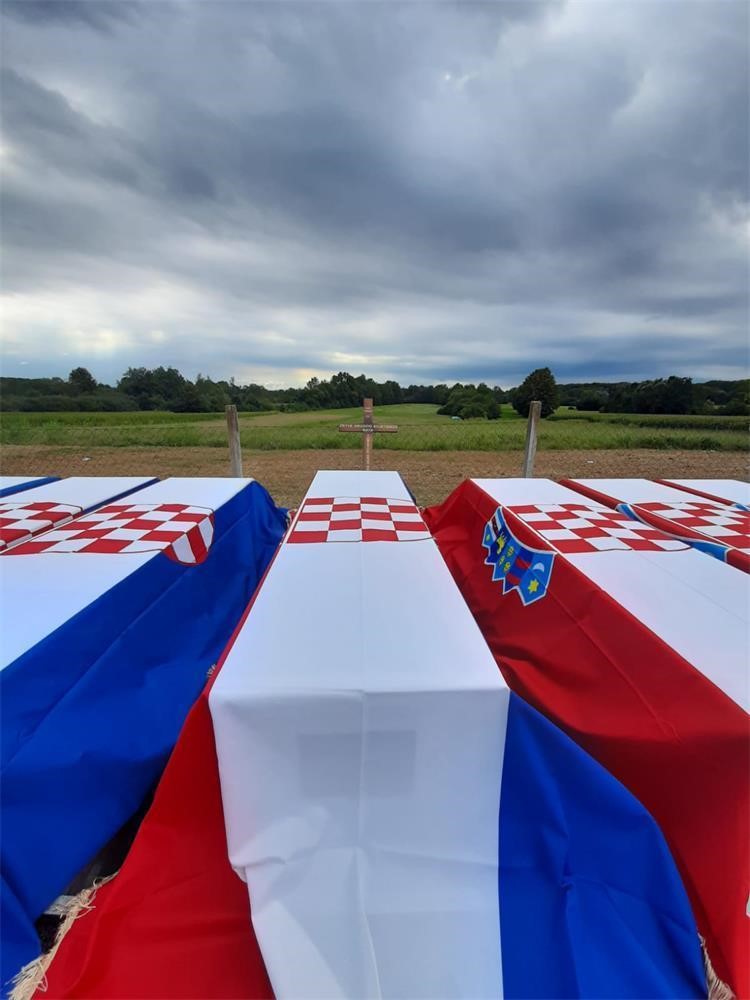
On the European Day of Remembrance for the Victims of All Totalitarian and Authoritarian Regimes – Communism, Nazism and Fascism, on Sunday, 23 August 2020, the remains of 53 people exhumed in March in Tomašica and liquidated by Tito’s Partisans were buried.
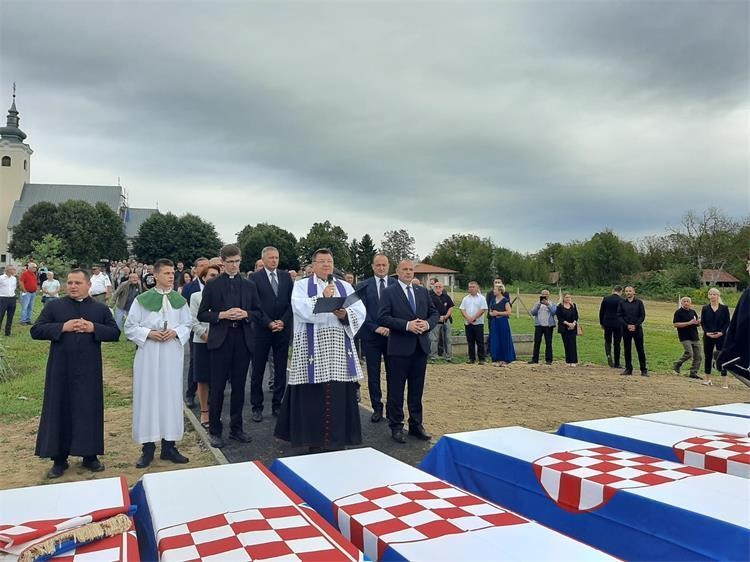
The bishop of Bjelovar-Križevci, Most Reverend Vjekoslav Huzjak, celebrated the Mass and funeral rites in concelebration with the pastor Rev. Kristijan Bogdan. The families of the victims who are still missing, in their silent grief, are looking for our further effort and cooperation so that they also can light a candle on the grave of their ancestors.


Activities during the process of searching for the victims of World War II and the post-war period
“In the previous term, the Ministry of Croatian War Veterans significantly improved the Croatian model of searching for missing persons by modernizing the terrain search technology and providing training to the the staff with operational and analytical experience; we opened branches in Vukovar and Split and inspected over 35,000 m2 of terrain in the past four years.
In the Ministry’s records, over 1,000 possible cemeteries have been reported, which are in various stages of investigation. In the past four years, field research was conducted at 60 locations, while at 42 locations the remains of victims of Tito’s communist regime were found.
In Tuškanac, 102 mortal remains of people killed in the World War II and the post-war period were exhumed; 294 in Gračani, 82 in Macelj, 25 near the Faculty of Teacher Education in Zagreb, 130 in Brdovec, 30 in Zagvozd, 55 in Vaganac, 19 in Gospić and many other minor sites. Special mention should be made of the last large exhumation in the Jazovka pit, from where 814 remains of victims of Tito’s regime were exhumed.
Source: Ministry of Croatian War Veterans
Editorial/komunistickizlocini.net