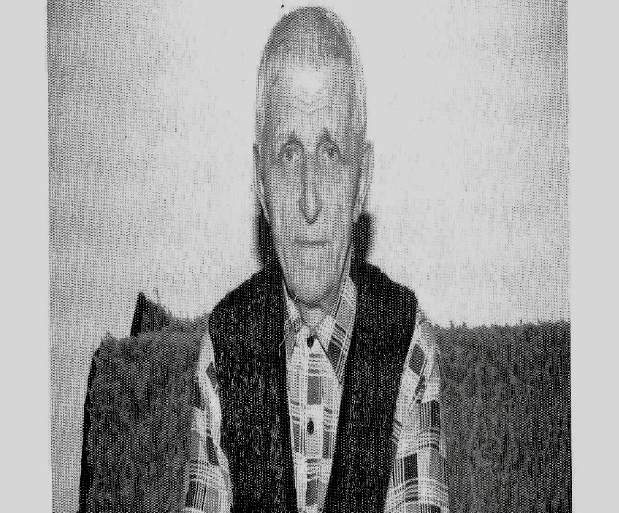





Testimony of partisan Jerko Antić
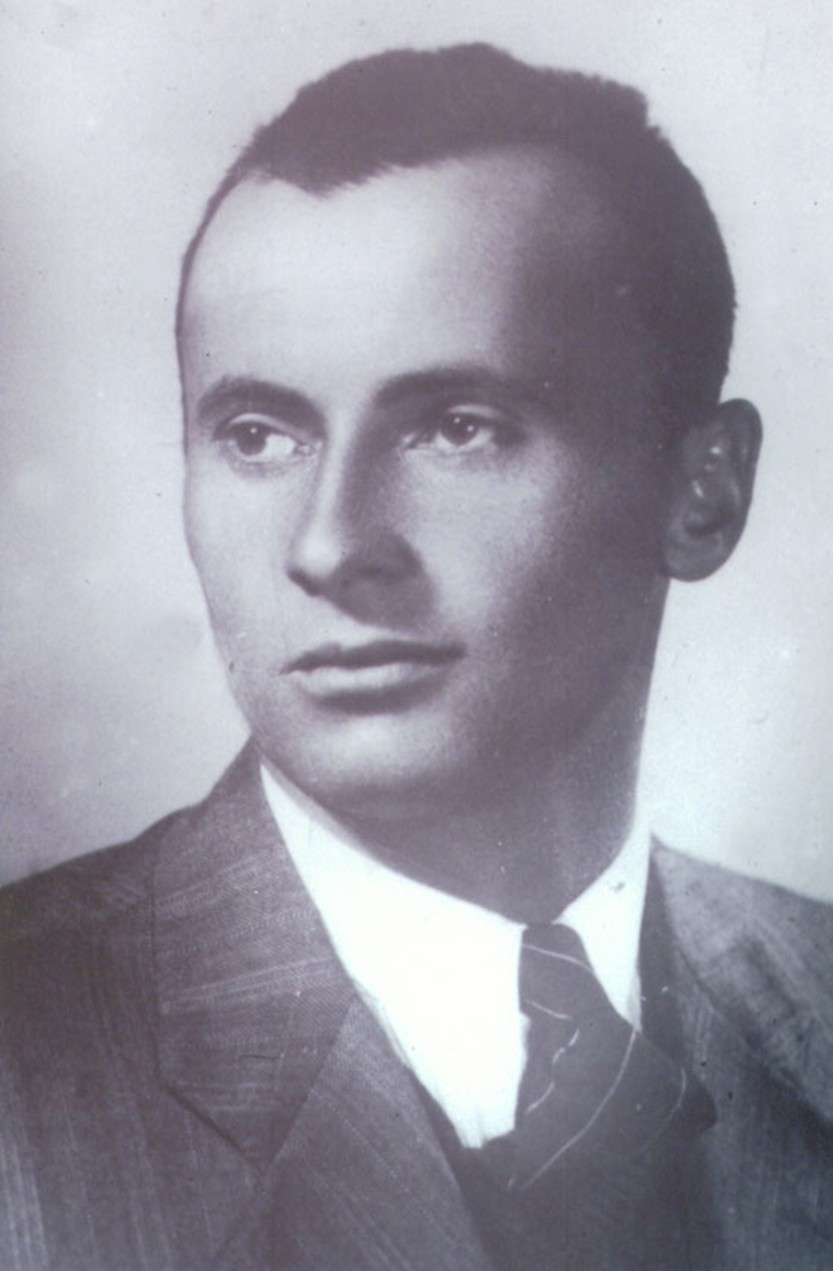
Jerko Antić
“Not far from us, about 2 km, there was a pit, a former mine or something similar. I believe around 6,500 of them were thrown in there. Not far from where we were, they loaded them on trucks, chased them to this pit and killed them. I remember that a certain Petar Duvnjak, who was born in Dalmatia or came from Dalmatia, was the main perpetrator. He stood behind the machine gun and emptied cartridge after cartridge ending down the lives of young Croats. To be truthful, I did not see him kill, but the chauffeurs who had to transport the prisoners and saw this terrible massacre told me about it and were horrified. But I can testify firsthand that this Peter was gripped by madness every now and then. I also helped hold him when he was stricken with ‘Partisan sickness’. Five of us had to hold him.”
“I was born on September 6, 1928 in Klobuk, in the hamlet of Kapel Mahala, and I now live in the hamlet of Osoje. My father is Ćiril, and my mother is Andra née Petrović from Klobuk, hamlet of Poljana. I attended four grades of elementary school, but due to various circumstances and the war, it took longer than four years. The school was in the house of Mičo Ćutuk in Vojnići. My teacher was Alojzije Perković, from Lika. After him came the teacher Olga, whose last name I do not remember. She was an enthusiastic Croatian woman and wore an Ustasha cap. She left us in 1943 and I do not know what became of her. So we were left without a teacher and the school stopped working. Then we went to Veljaci and I finished the fourth grade there. It was 1943, and after a few months I received an invitation to join the Partisans. But we’ll talk about that a little later. After those few years of school, I worked in agriculture, like everyone in my house and in the whole area. A little tobacco smuggling, a little grain, a few sheep and a goat… If you vote for the Serbian radicals, your tobacco will pay well, if you vote for Maček, for the Croatian Peasant Party: laths on your back and go home with empty pockets! The older ones know what tobacco laths are, and the younger ones should ask and learn how the tobacco was processed. Some in Klobuk even voted as instructed and were rewarded while others were punished! Political obedience was, and always is, demanded of us, how long will that last?!”
Two months in the pit
“It’s the fall of 1944, the Partisans are coming, one does not know what will happen. Before we saw the Partisans, a group from my village left with the intention of going in the direction of Široki Brijeg. We arrived here near the river and saw that the Partisans were already standing guard on the bridge. The river swelled, it would have been difficult to cross it, and we went into a pit. Nobody knew about this pit except Mate Antunović, known as Maće. He was ahead of us, and we followed him into this pit. We hid there for about two and a half months. There were 11 of us in the group: my father Ćiril, my brother Milan and I, and Milan Antunović, Adam Antunović, Ivan Mlinarević, Ante Korda, Marijan Petrović, Mijo Petrović, Ante Petrović alias Majić, and Franjo Pezić. No one was married except my father, who was born in 1898, and Adam Antunović, born in 1907. All the others were teenagers, some of us were boys.
After two months and more, two of the group came out of the pit feeling that something might happen. They began to fear we would get caught. Marijan Petrović said: ‘I had a bad dream last night, it seems to me bad things could happen! I will leave the pit.’ His cousin Mijo Petrović also went with him. They left, and we stayed. The Partisans came the next day and started dropping bombs in the pit. Fortunately, the bombs flew past us, fell to a greater depth and exploded at the bottom. We were on the side of the pit where there was enough room to settle down, and the pit continued downward. Nothing happened to us. To make sure that no one was there, the Partisans tied Ana Petrović, Marijan’s sister, to a rope and lowered her into the pit. They threatened her and demanded she tell the truth. They lowered her down to our level. And since we had a water barrel with us, we poured water over her and she screamed at them to pull her back because she had reached the water and if she went any further she would drown. They pulled her outside and she told them that she did not see anyone down there. Anica was brave and a true martyr.
We were betrayed by Manda Čuljak, who was called Mlada. She had a relationship with Ante Barbir and other leading Partisans. That day the Partisans came across the opening of the pit and threw several bombs into it, thinking that if there were people in it, they would have killed them. Maybe they did not take her story seriously at all. But when they returned to her house and said that they had not seen or heard anyone, she claimed that we were definitely in the pit and that if we or any of us were still alive, we would kill her and others who were working with the Partisans once we came out. She demanded that they catch us. The Partisans returned to the pit and stayed there all night until dawn. The guards threw stones and bombs. But whatever fell, it flew past us and went deeper. We also had some boards with us with which we protected ourselves. The pit is still there today. Maybe you will find something in it from the time we were there.”
Come out or die
It dawns, they call us and ask us to come out. They read out our names. Apparently they have figured out exactly who was in the pit. And the two who had gone before us the day before, Marijan and Mijo Petrović, were watching from the hill what was happening around the pit. We went out, because there was nothing else to do, otherwise we would lose our skin. They connected us two and two in a wire and pushed us forward. We came to Marijan Pezica’s house in Kapel Mahala. He was the mayor in Ljubuški during Croatian rule. From there they led us to Veljaci, near Curić. And there, brother, they beat us mercilessly. They beat us with everything they could get their hands on, rifle butts and all. Anto Petrović, my brother Milan Antić and I were beaten less. We were children. I only got one strong blow from one of the men. Ante Korda, known as Viličević (he was also called Strauss), received the most beatings. They found the uniform of the Devil’s Division on him. He escaped from the German army some time ago, returned home and then came to the pit with us. Later he was sent to the KNOJ (People’s Defence Corps of Yugoslavia, t.n.). We did not know those who led and beat us. Judging by their appearance, clothes and language, they were Serbs from eastern Herzegovina.
Another pit
They found out that there is a pit in the hamlet of Osoje and that people are hiding in it, but they did not know where exactly it was. Therefore, they urged us to tell them the place. They said that whoever would tell them about another pit would go home immediately. After some discussion, Ivan Mlinarević told them that he would take them to this pit. Poor man… I guess he thought that the people in the other pit would be found in any case, so at least he would get rid of his own worries. In such difficult times, all sorts of things happen. Almost all of them followed him into that pit. We were taken to Ljubuški, being threshed along the way. They rode on horses, while we were barefoot. They chased and beat us. It was night when they took us to Ljubuški. They said: ‘We will beat you until midnight, and from midnight the fish will eat you!’
In Ljubuški, they soon singled out Ljubo Antunović and Ivan Petrović. The two were killed right behind the municipal building, where the monument is nowadays. I did not see them killed, but Ante Petrović and my brother Milan were watching. They were the youngest among us and were separated from us. They covered the two young men with an old coat so that they could not see what was happening, but there was a hole in the pocket of this old cloak and through this hole they saw them being killed. Together with Ljubo Antić and Ivan Petrović, a woman or a girl was also killed. That was in February 1945. We were locked in the basement of the municipal building. They gave us some porridge to eat.”
From prison to the Partisan army
After 10 or 12 days, they came to the cellar and said to my father, ‘You will go to the harvest,’ to work somewhere in the Neretva Valley in the Ammophila harvest. They also sent Adam Antunović there. The two of them were the oldest of us and they were sent to forced labor. I do not know how many months they were there. Ante Korda was sent to the KNOJ. My brother Mile, who was born in 1932 and was too young, was sent home. Fran Pezić, Milan Antunović and I were also sent home, with orders to report to the Partisans as soon as we received a summons. We came home, and the summonses arrived before us! And we had to go back to Ljubuški immediately. They sent us to the 11th Dalmatian Brigade. But first we went to Mostar. They gave us rifles and some clothes. From there we went with them to Vrgorac. We spent the night there and the next day we went to Igrane, where the boat was waiting for us, and we then continued to Zadar.
The fate of the people from the other pit
In another pit, the one in the village of Osoje, there were Marijan Međugorac, Rade Međugorac, Ante Međugorac, his son Vinko Međugorac, Rudo Petrović and his son Vinko Petrović, Andrija Međugorac, the father of my present neighbor Nikola. Rudo Petrović ran away from them, but they caught him and took him to his house, near my current house. The house had two exit doors, and the Partisans did not notice. When they came to Rudo’s house, he said to them, ‘Guys, let us eat something and then we’ll move on.’ And they accepted the offer. Rudo cut dried pork loin and bread, baked eggs – he gave what he had. They sat down by the fireplace to eat, and he sat with them. Then he said, ‘We should have a jug of good wine with this food.’ He took the jug as if he were to pour wine in another room. But he left the jug and sneaked out the side door. One soldier was guarding the main door, but he did not know about the other. When they saw he was not there, they gave chase. A race and shouting broke out. They searched everywhere, but they did not find him. He went down to the river and hid there. He knew a place where the water had deeply depressed the earth under the bank, and he hid there. They passed over it and did not even think that there were such holes near the bank.
Rudo escaped them, but others were killed. They took them to the bridge at Mladi in Veljaci and killed them there. Rudo’s son Vinko was also killed there. He was my age. Since they took my group to Ljubuški, I did not even know that they had been killed. When we returned to Tomo Grizelj’s house, his wife told me that people from Osoje (from Klobuk) had been murdered there and that one of them blamed himself and begged, ‘Do not take me, you said you would let me go when I told you about the pit.’ And they told him, ‘We do not like traitors. Just as you betrayed them, you would betray us.’ And so they killed Ivan Mlinarević also. Their bodies were thrown into the river and after a few days they were found in Otunja near the mill.
From Zadar to Klagenfurt
As I said, we came to Zadar by boat, and then they joined us in the war operations. Through Ravni Kotari and in the direction of Bihać we wemt. At the entrance to Bihać, near Golubić, we were surrounded and there were many casualties. After that we went towards Gospić and there we were surrounded on a hill and many were killed, and we suffered heavy losses in Gorski Kotar. We fell into a trap and out of 160 of us only 12 were still alive. We were picked up and sent to war without any training; we got rifles and were sent off to live or die!
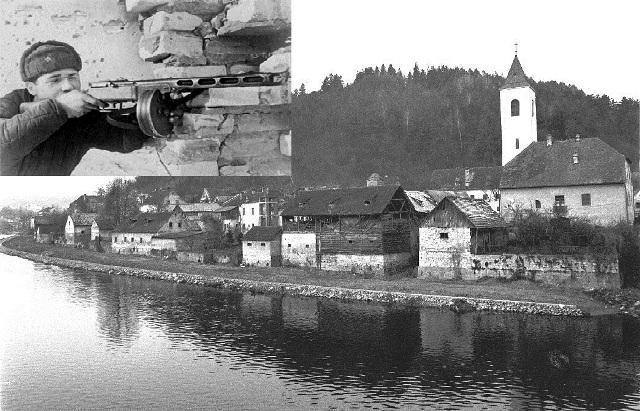
Of my young people from Klobuk who were recruited with me for the Partisans, none returned except me. I was lucky enough to be hired as a courier, so somehow I survived. I did not need to go to the front. We were in Sušak, Istria, and made it to Trieste. They reached the city halfway and then the order came to go back. We drove through Slovenia and reached Klagenfurt in Austria. They ordered us to withdraw from those areas as well, and we arrived at a place a little more than 30 kilometers from Ljubljana. It was Žiri near Ljubljana.”
Massacre of Croatian prisoners
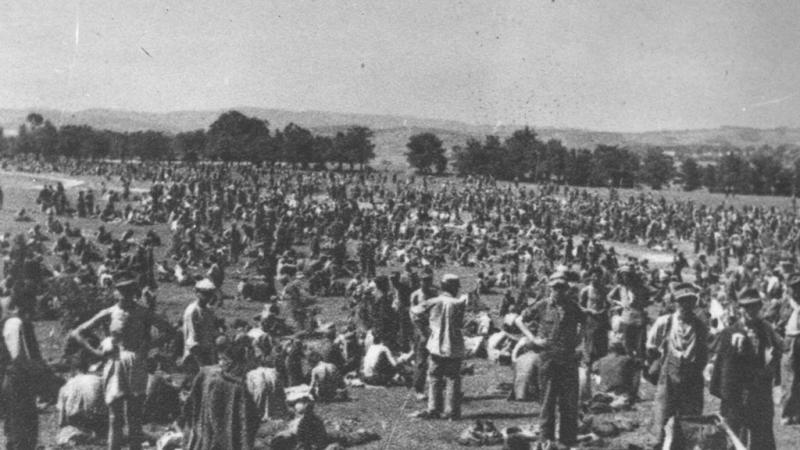
“While we were not far from Ljubljana, they were bringing Croatian prisoners. I heard that many of them were from the region around Ljubuški, so I looked for Pavle Antić’s cousin among them. I did not find him, but I found Lovro Antunović, Jerko Antunović, Ivan Mlinarević, brothers Pero and Stipo Rašić and some from Vitina. I brought them as much food as I could. I was a courier, so I could move around a bit more than other soldiers. They were wearing Finnish uniforms. They were offering me kuna (Croatian currency just prior to that time, t.n.), but they were no good. And even if they had been worth anything, I did not do it for a gain. There were no spoons, so the little porridge I was able to bring them they ate with their hands.
It was there where they were lined up. Those born between 1926 and 1930 were singled out. All the others were tied up and chased into the pit. They threatened that if someone vouched for someone not being an Ustasha, and they found out from the local committees that he or she was one, his head would roll! Not far from us, around 2 km, there was a pit, a former mine or something similar. I believe around 6,500 of them were thrown in there. Not far from where we were, they loaded them on trucks, chased them to this pit and killed them. I remember that a certain Petar Duvnjak, who was born in Dalmatia or came from Dalmatia, was the main perpetrator. He stood behind the machine gun and emptied cartridge after cartridge ending down the lives of young Croats. To be truthful, I did not see him kill, but the chauffeurs who had to transport the prisoners and saw this terrible massacre told me about it and were horrified. But I can testify firsthand how this Peter was gripped by madness every now and then. I also helped hold him when he was stricken with ‘Partisan sickness’. Five of us had to hold him.”
From Slovenia to Tetovo
From this place near Ljubljana we were sent to search the Slovenian hills for White Guardsmen, the Slovenian anti-Communists. So I wandered around Slovenia with the army for two months. Then we were sent to Zagreb, where we stayed for 4 or 5 days. We continued in open cars to Zemun, then to Skopje and finally to Tetovo. There was our headquarters, and we were sent on patrol in the mountains near the Albanian border. I stayed in those mountains until the end of November 1945, when the order came that those who were in no other army except the Partisans could go to military school if they wanted to. If they did not want to, they were to go home. That applied to us young people, because we could not even be in any other army. I did not want to stay, so I went home from Tetovo.
Source:
Od Bleiburga do Ljubuškog, svjedočenja preživjelih (From Bleiburg to Ljubuški, testimonials of the survivors, t.n.), Ljubuški – Chicago 2014.
Vedran.P/crimesofcommunism.net