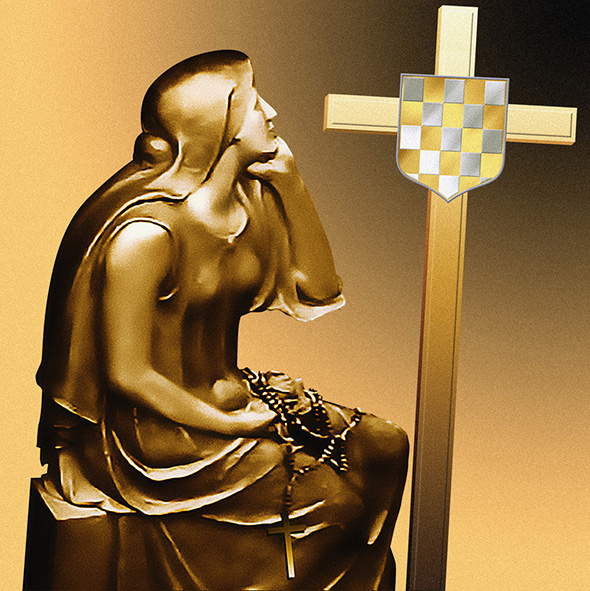





Monument to mothers
Croatian widows II. World War and the aftermath
What were their mornings, days, and nights like? What were their dawns like, what did their dreams look like? With how much worry, fear and uncertainty did they look at the children, wake up and go to sleep? How great was their longing, their loneliness, their yearning and desire for a man’s hand, for support and tenderness? Only they knew that; they entrusted only a small part to their closest relatives and took the rest to the grave.
The women in question are Croatian widows from World War II and the post-war period. It is an epic and heroic theme for writers and literature, which is still unnoticed and kept in silence, just like they lived and survived. The challenge would be to shed light on their lives, their position and place in society, the attitude of the government towards them, their poverty and hunger, their educating and upbringing of children… In the end, they should be remembered publicly and permanently, they should be saved from oblivion and a monument should be erected to them and their suffering, as a sign of gratitude and remembrance. So that future generations and societies know and learn never to forget, and so that something like this does not happen ever again.
Respect for the victims
The sponsor of the project is Association of Descendants of Widows of World World War II and the Post-war Period from Ljubuški. The idea to erect the monument came from its chairman Ante Milas, whose mother Anica became a war widow in 1945 with eight children. After World War II and its aftermath, there were 716 widows and 2,227 orphaned children in the municipality of Ljubuški. Their husbands and fathers had fallen as members of branches and units of the then Croatian army. Whole villages in the municipality were decimated.
Hard life
“This is true not only for the municipality of Ljubuški, but also for other municipalities, for the whole of Herzegovina, for the whole of Bosnia and for the whole of Croatia. Severe poverty, self-denial and suffering were their reality. With numerous children, alone, wearing black clothes (the sign of mourning, t.n.), they bravely defied all sufferings and adversities and preserved the dignity of the family. In this way, we want to express our respect and gratitude for all that they endured, suffered and endured. We owe them this, we must treat them with great respect, and a monument is the least we can offer them,” said Jerko Artuković. The monument, consisting of a mother and three children, will be 240 cm high and will be placed in the center of the city in front of the Municipal House.
Source: www.potomci.info/crimesofcommunism.net