




Sokol forward right
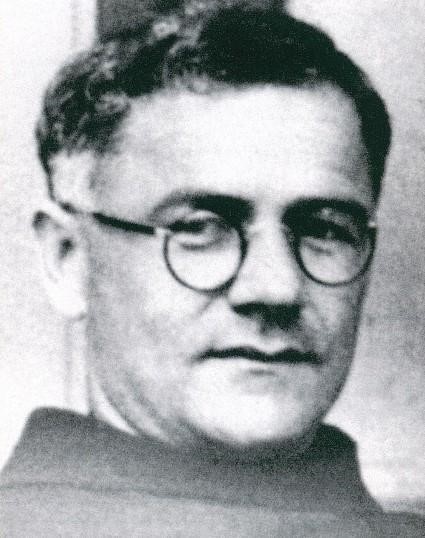
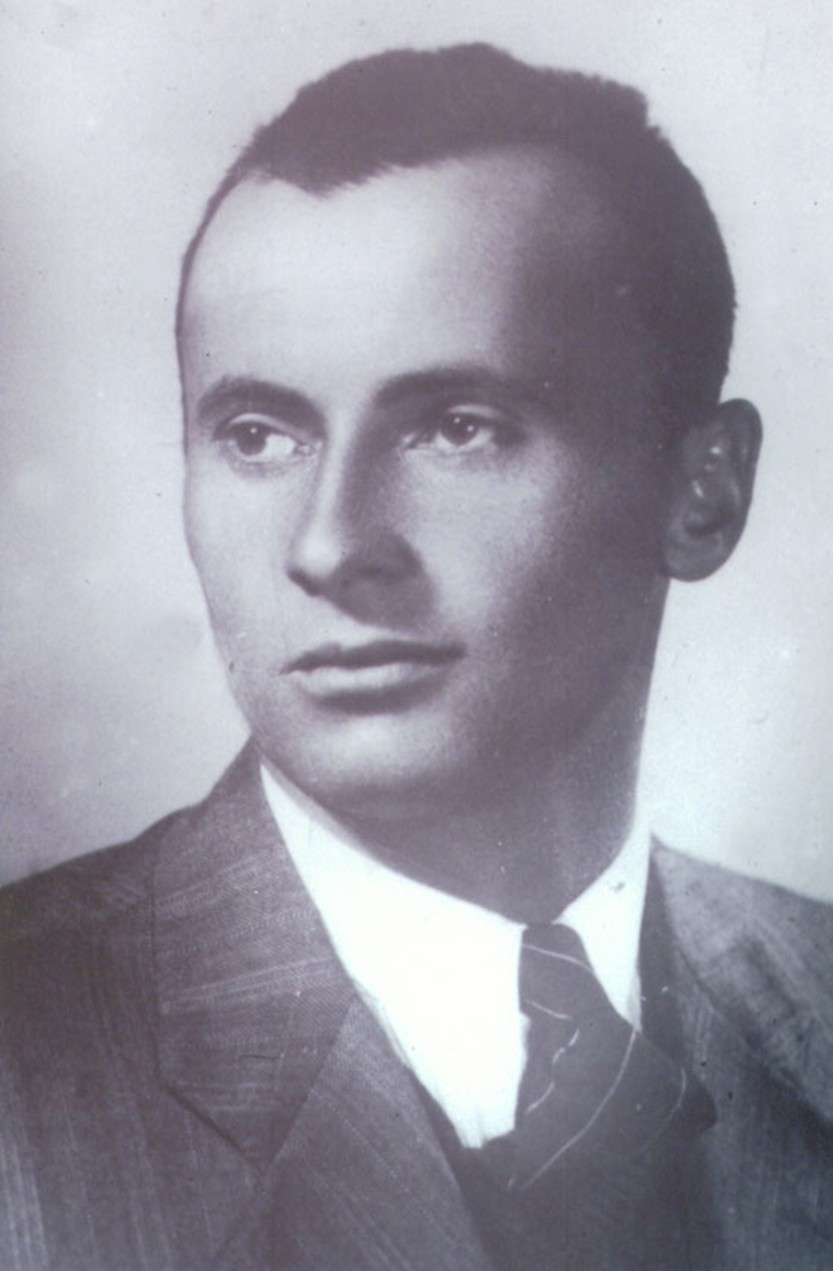
Fra Bernardin Sokol
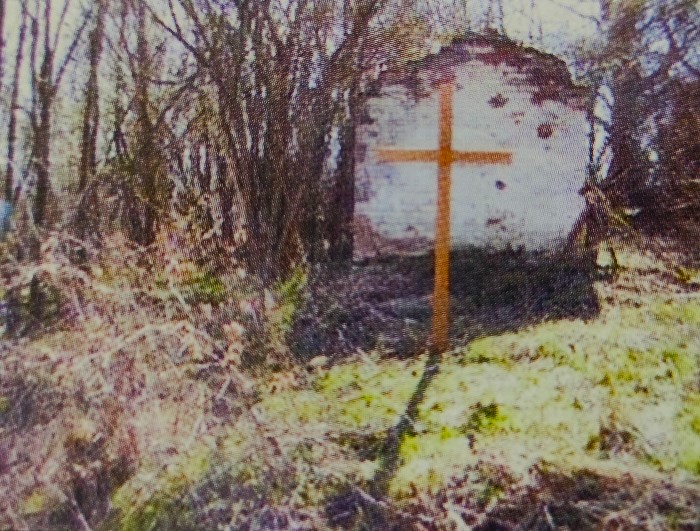
The date when the partisans took him from the monastery at Badija is commonly considered the day of Fr. Bernardin’s death; it was the evening of September 28th, 1944. He was killed by people who called themselves anti-fascists; they killed him without any trial, even though he had done nothing wrong. They threw his body into the sea, hoping it would hide their crime. However, the sea did not keep its secret; his body washed up on the shore of Trstenica bay in Orebić. A group of people who recognized him buried him in an abandoned machine gun nest located there. A resident of Orebić, who attended the burial as a boy, testified about this publicly in front of TV cameras on the 68th anniversary of his death, on September 28th, 2012, when the bust sculpted by Franciscan Joakim Jaki Gregov was placed in the courtyard of Sokol’s birthplace in Kaštel Sućurac.
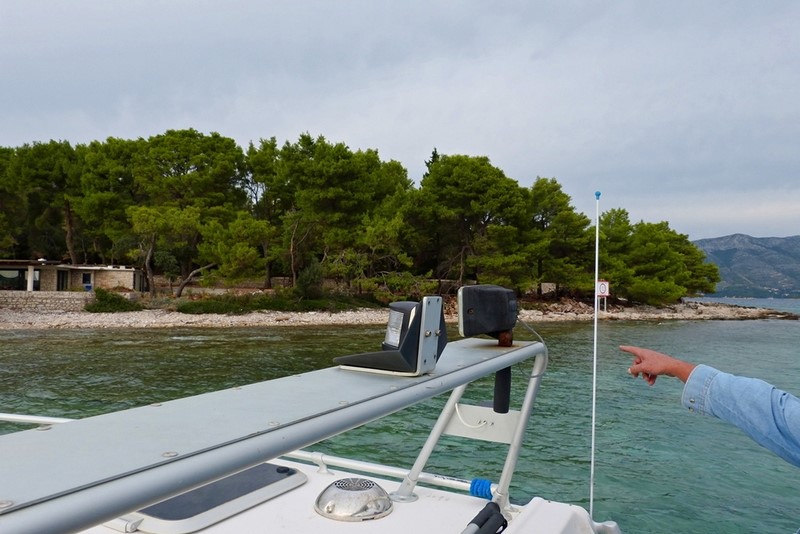
For over seven decades now, Sokol’s body has been lying beneath the beachfront in the Trstenica bay, and he walked those shores much shorter than that. He was killed when he was 56 years old. Next year, 2018, will be the 130th anniversary of his birth. During his lifetime, he composed, played music and sang a lot. The so-called anti-fascists suddenly interrupted that song, when they killed a meritorious member of the Croatian people, a patriot; they put an end to his plans, composing and his song. They depraved the humanity of a capable and widely recognized great Croatian musician of world renown, whose name was included in specialized foreign lexicons during his lifetime. He was falsely accused of betraying the partisans, and it was later revealed that a woman had done it. They tried to justify their crime with various lies. They tried to find justification in his works.
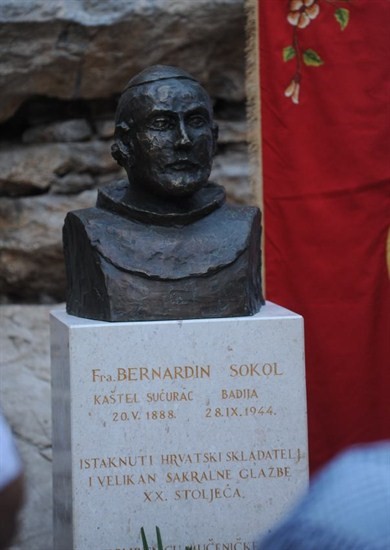
In his book, “Magnum Crimen”, Viktor Novak reiterated the false accusation, quoting the lyrics of Miho Jerinić’s song: “Ante will bring salvation to Croatia, Croats will have their land”, from “Anthem to Ante Starčević”, claiming that Sokol was singing about Ante Pavelić. Sokol did indeed write the music for the song, and published it in the collection “Hrvatsko selo” /“Croatian Countryside”/. In July 2002, well into the rule of the modern-day Croatian state, Ivan Jeričević, aka “Čompo”, the former president of the Anti-Fascist Council of the Union of Fighters of the Island of Korčula, stated on the local radio Korčula that “in early September 1944, a boat with fighters from the Korčula detachment docked in the middle of the night in front of the monastery at Badija”, and that the partisans asked the friars to give up Rev. Bernardin Sokol, because he had allegedly given up six partisans to the Germans in a bunker at Vrnik. He also said that the friars had found him and handed him over, saying: “Here he is, rid us of this evil.” The State Attorney’s Office did not respond to that. Only Friar Berard Barčić, who once lived with Sokol at Badija, reacted and denied those blatant lies through the media.
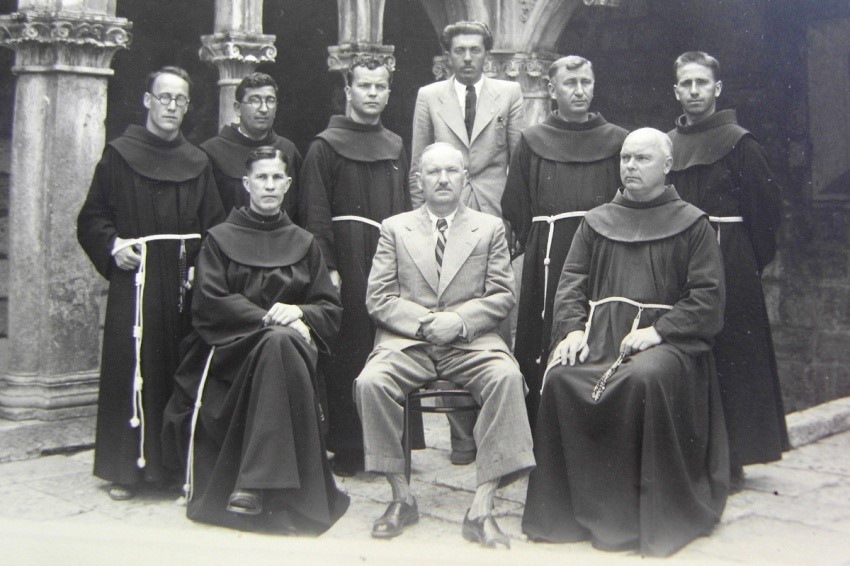
Bernardin Sokol was born on May 22nd, 1888 in Kaštel Sućurac. At baptism, he was named Luka. He finished elementary school in his hometown. He continued his education at the institute of the Franciscan Province of St. Jerome on the islet of Košljun, and later in Zadar, where he passed his maturity exam on July 9th, 1908.
He donned the monastic garb on August 23rd, 1905 in Koper. He studied theology in the monastery of the Little Brothers in Dubrovnik. He was ordained a priest on July 7th, 1912. He taught in the lower classical high school on Badija and Košljun. He studied music at the “Akademie fur Musik und darstellende Kunst” in Klosterneuburg near Vienna, in the Augustinian Abbey where a church music school was established as a department of the Vienna Music Academy. He passed his final exams in 1917 and became a singing teacher, choir director and organist.
In late 1917, he came to the monastery of the Little Brothers in Dubrovnik. He taught morals, ecclesiastical law and music at the Franciscan college there. At that time (from 1918), he also taught music at the state high school. He remained at the Little Brothers monastery until 1924, when he went to Rome for further theological and musical training. He became doctor of theology on April 6th, 1925 at the University of Rome and, on June 30th, 1926, he completed his studies in musicology in the same city, at the Pontifical Higher School of Music. Between February 1927 and 1932, he taught introduction to choral singing and church musicology as a part-time assistant professor at the Faculty of Theology in Zagreb.
Editorial board/komunistickizlocini.net