


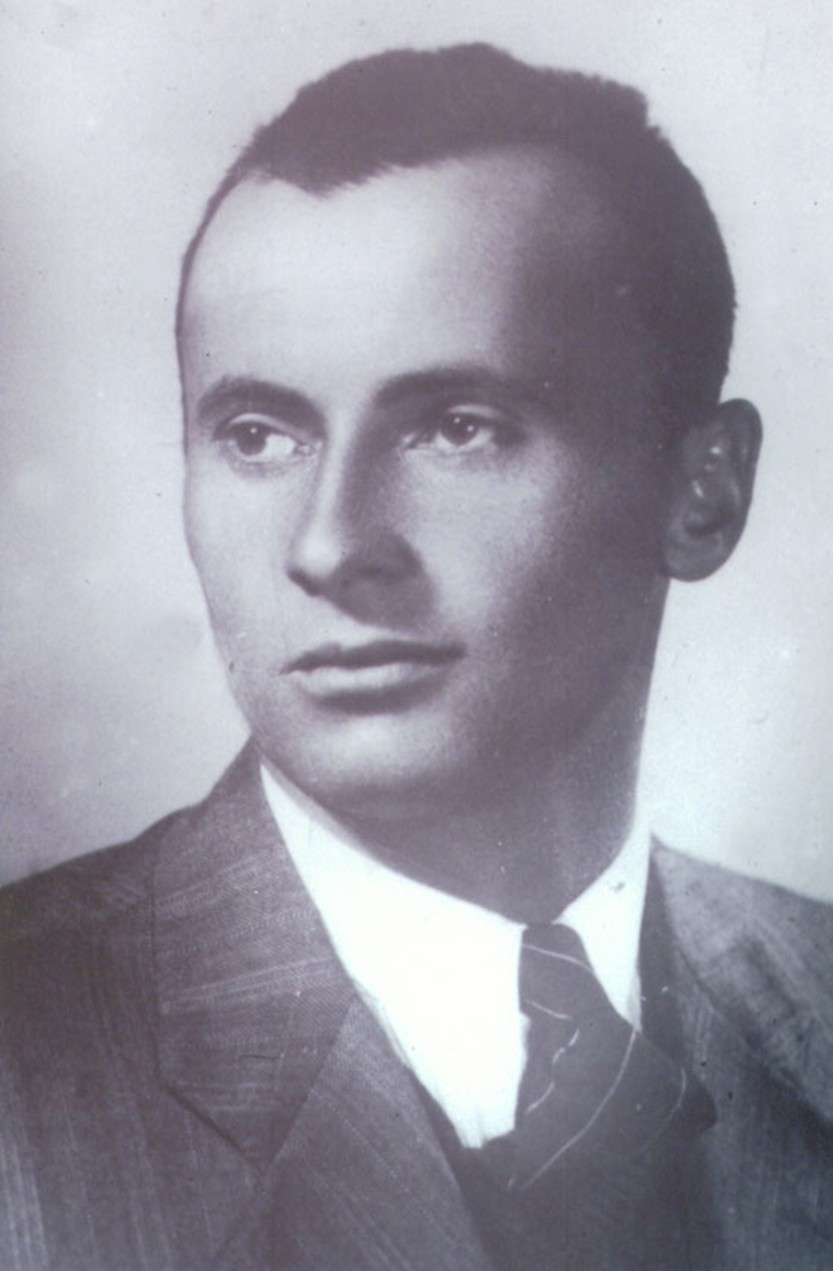


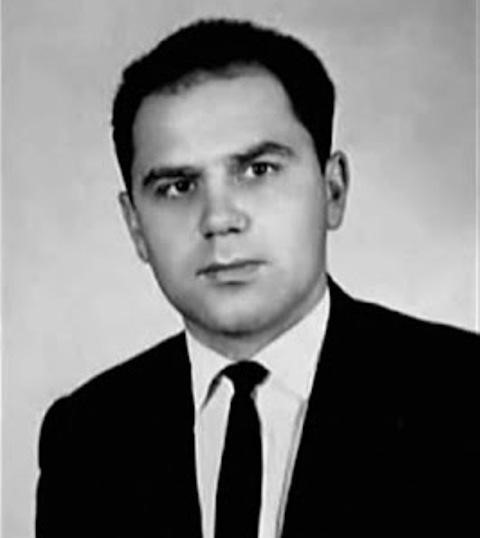
Geza Pašti
Geza Pašti
In the early 1950s and 1960s, young men who did not play a role in the NDH, nor could they because of their age, fled Croatia and Bosnia and Herzegovina en masse. They decided to flee because they disagreed with the violently enforced, anti-Croatian and anti-Catholic Communist regime. This departure of a large number of young people, especially intellectuals, was described by many as the “second Bleiburg”.
Several Croatian emigrant organizations were active in emigration at that time. However, a special place among them is occupied by the HRB (Croatian Revolutionary Brotherhood), the largest Croatian secret organization during the period of Communist Yugoslavia. The founding documents of the HRB show that the organization was established in Sydney in September 1961. The most important discovery from these documents is that, contrary to all previous claims and opinions of the alleged, “well-paid,” émigrés of the UDBA and various foreign secret services, the first head, i.e. the Secretary General of the HRB, was not Jure Marić, but Geza Pašti.
Geza Pašti, born on June 6, 1934 in Čepin near Osijek, as a student of the Real Gymnasium in Osijek, left Yugoslavia in mid-1952 and reached Australia via Italy, where he participated in the founding of the “Croatian Revolutionary Brotherhood” (HRB) in 1961 and became its first chairman.
The basic goal of the HRB was the establishment of an independent Croatian state, and the main method of action was armed resistance against Tito’s totalitarian Yugoslav regime.
The documents of the UDBA in Osijek state, “In Osijek, April 11, 1967. Proposal: Geza Pašti, proposal for the inactivation.”
He was kidnapped in Nice, France, and taken to Yugoslavia by the notorious UDBA, the Communist secret service responsible for liquidations, where he was killed.
The UDBA received information about Pašti’s tasks in Europe from its collaborators, employees of the republic headquarters of the State Security Service in Zagreb. Decision was made to liquidate him. On the evening of July 17, 1965, around eight o’clock, the owner of the house in Nice where Pašti lived called on him to answer the phone.
The conversation with an unknown person, probably a woman, lasted only very briefly. After that, Pašti hurriedly left the house. No one ever saw him again.
Less than two years after this event, the leadership of Osijek UDBA wrote the following information:
“In Osijek, April 11, 1967. Proposal: Pašti Geza, proposal for the inactivation. We have suspended his contacts through our measures so they are not of interest anymore. Taking that into consideration, as well as the suggestion of a friend from the Republic Ministry of the Interior, I propose that we delete the person from the working files.”
According to senior UDBA officials, Pašti was abducted, taken to Yugoslavia, and liquidated there.
According to the testimony of a former high-ranking UDBA official, after the abduction Geza Pašti was taken to Yugoslavia, where he was initially offered cooperation and release, i.e., return to emigration. When he refused, he was taken to an estate of the Federal Ministry of the Interior (the SSUP) in Fruška Gora, where he was tortured, interrogated and finally liquidated.
Croatian Communist leader Andrija Hebrang spent some time on the same estate in 1948, and a few decades later, in August 2000, the well-known Serbian politician Ivan Stambolić, an opponent of Slobodan Milošević, was liquidated here.
Sources and literature:
Anto Kovačević, Čovjek i njegova sjena, Zagreb, 2012.
narod.hr, April 11, 2018; accessed November 19, 2022
Editorial/crimesofcommunism.net