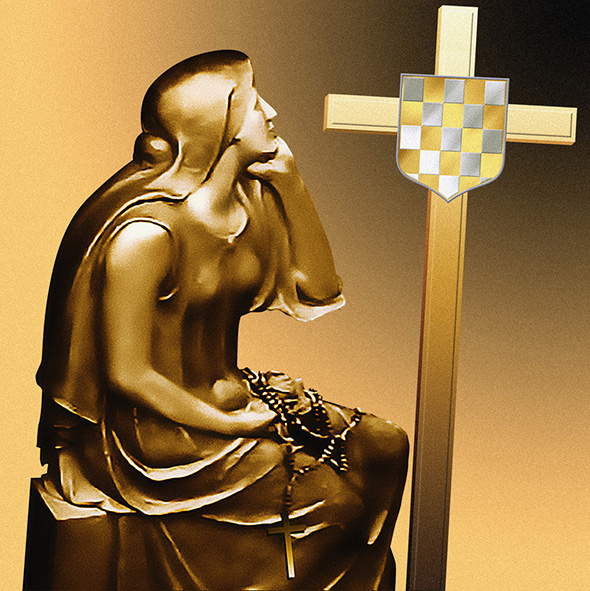





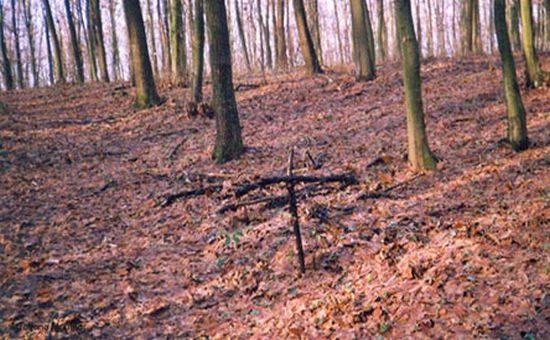
The cross in the forest is an illustration of suffering
Girls boarding school in Preradovićeva Street
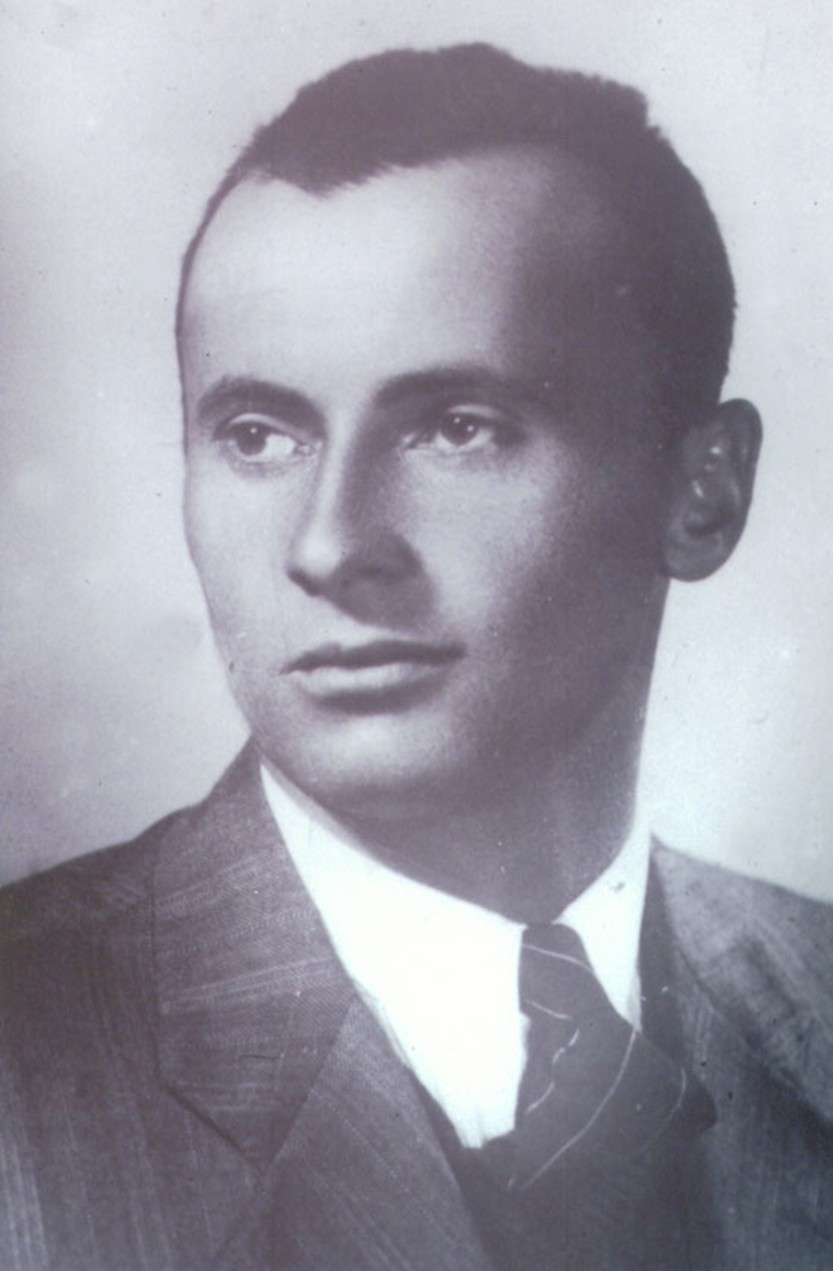
Krešimir Babić was born in 1913. From 1935 to 1937 he was learning the mechanic’s trade by attending the pilot training school near Mostar and later also in Zagreb. During the Second World War, he worked as driver and car mechanic, and did his military service in the Croatian Domobran [Home Guards]. At the end of the war and the partisan entry into Zagreb, he was employed as a mechanic in the military garage in Solovljeva no. 18 (today Kneza Borne, next to the Sheraton hotel), which was taken over by the partisans on 8 May. In 1952, he emigrated with a false passport. He died in 2009 at 96 years of age.
His testimony of the massacre of young girl pupils in Zagreb, which was told to him by a partisan fighter, will shake anyone who has any sense of justice.
Several days after the partisans took over the military garage, he came into conversation with an armed guard. The person looked pale and tired and it seemed that he was troubled by some inner turmoil. This is what he recounted:
“I have not slept for several nights” he said. Carefully looking around, the guard continued in a quiet and subdued voice:
“Look at the night before yesterday, for example. We took seventy girls from the boarding school in Preradovićeva Street in Zagreb in lorries. They were between sixteen and twenty years of age. They were taken and shot near the first bend after Velika Gorica, along the road towards Kravarsko. The painful cries of these young girls still echo in my ears: “What is our guilt, what are we accused of? Why do you want to kill us? I shall never be able to forget how these poor girls were clinging to each other, trembling and sobbing in fear in front of their killers!”
The only question that Krešimir dare ask the partisan guard is where he was from. He replied that he was from Đakovo and that his name was Mate.
Preradović Street is barely a five minute walk from the square that carries the name of the Commander in chief of partisan units, who was responsible for this, as well as other mass crimes committed by Tito’s Yugoslav communists against the Croatian people during and after the Second World War.
Sources and literature:
Prcela J.- Guldescu S.: Operation Slaughterhouse – Eyewitness Accounts of Postwar Massacres in Yugoslavia,
Dorrance & Company, Philadelphia 1970, 449-451.
Hrvatski vjesnik, Australia, 05.12. 2003., p.15.
Maksimilijan Baće: Apsurdi Karla Marxa, BiB Nakladništvo d.o.o., Vinkovićeva 8, Zagreb 2006.
Editors/crimesofcommunism.net