




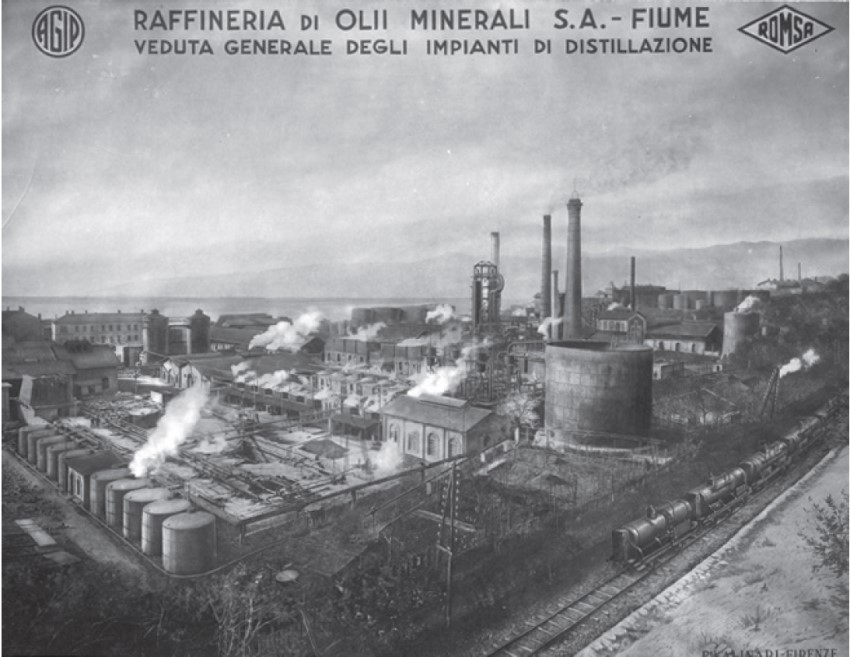
Photo of the refinery in Rijeka around 1930 (source: Đekić, V., “Rafinerija nafte Rijeka – europski pionir u preradi crnog zlata” (Oil Refinery Rijeka – European Pioneer in Refining of Black Gold)
Communist lies
One of the tactics of numerous local socialists, Yugoslav nostalgists, Tito-philes and the like is to convince those around them that “things were better in the past,” referring to the period of Communist dictatorship in the SFR of Yugoslavia.
Regardless of the facts about how people really lived “in the past,” how inefficient and unsustainable this system was, and the consequences we still feel today (and let us face it, how far are we from that system?), this boring myth will stubbornly live on. We will list here just a few of the better articles we have found that address these attempts at manipulation:
Ekonomija Titove Jugoslavije: odlaganje neminovnog kraha (P. Rajšić)
Mit o zdravoj jugoslavenskoj ekonomiji (P. Rajšić)
Bolji život? Jugoslavija u brojkama (M. Holjevac)
Brojke koje razbijaju mit: Jugoslavija nije živjela od industrije (Budućnost je naša)
Jugoslavensko ekonomsko čudo (razbijanje mitova) (renesansa.wordpress.com)
Usually closely related to this Yugoslav Communist myth of how “life used to be better” is also a kind of “origin myth” which claims that before World War II there was no industry in Croatia and then wise Communist central planners came with a vision and finally initiated the industrialization of the country, transforming a backward agricultural and gathering outpost into an industrial superpower.
Apart from reminding you of these articles in this blogpost, since they are a bit older and I don’t want them to be lost, I would also like to attach a list of some industries that existed in Croatia before the Communists came to power. The list is given below according to the scheme: Name of the company, headquarters (year of establishment).
INA, Zagreb (1882)
Jamnica, Zagreb (1828)
Podravka, Koprivnica (1934)
Gavrilović, Petrinja (1690)
Kandit, Osijek (1920)
Saponia, Osijek (1894)
Dukat, Zagreb (1912)
Zvečevo, Požega (1921)
Franck, Zagreb (1892)
Đuro Đaković (founded under the name Prva jugoslavenska tvornica vagona, strojeva i mostova), Slavonski Brod (1921)
Badel, Zagreb (1862)
Cedevita, Zagreb (1929)
Končar, Zagreb (1921)
Kraš (founded under the name Union), Zagreb (1911)
Varteks, Varaždin (1918)
Zvijezda ulje, Zagreb (1916)
Željezara Sisak, Sisak (1938)
Karlovačka pivovara, Karlovac (1854)
Pik, Vrbovec (1938)
Pliva, Zagreb (1921)
Shipbuilding Uljanik, Pula (1856)
Shipbuilding Kraljevica (1729)
Tvornica duhana Rovinj, Rovinj (1872)
Borovo, Vukovar (1931)
Tvornica šećera, Osijek (1905)
Shipbuilding 3. Maj (founded under the name Kvarnersko brodogradilište), Rijeka (1892)
Torpedo, Rijeka (1853)
Tvornica papira, Rijeka (1821)
Zdenka, Veliki Zdenci (1897)
Belišće, Belišće (1884)
Koestlin, Bjelovar (1905)
Čakovečki mlinovi, Čakovec (1893)
Čateks, Čakovec (1874)
Međimurska trikotaža, Čakovec (1923)
MTČ, Čakovec (1923)
Vajda, Čakovec (1911)
Belje, Darda (1911)
Dalit, Daruvar (1905)
Daruvarska pivovara, Daruvar (1893)
Pamučna industrija, Duga Resa (1884)
Dalmacija, Dugi Rat (1908)
Đakovština, Đakovo (1921)
DIK, Đurđenovac (1895)
KIO, Karlovac (1903)
Lola Ribar (founded under the name Tulić Mlin), Karlovac (1932)
Cemex, Kaštela (1904)
TOP, Kerestinec (1922)
Mlinar, Križevci (1903)
Cetina, Omiš (1930)
Drava tvornica žigica, Osijek (1856)
Karolina, Osijek (1909)
Osječka pivovara, Osijek (1856)
IGM Ciglana, Petrinja (1920)
Sardina, Postire (1907)
Brionka, Pula (1942)
Istra cement, Pula (1925)
Viktor Lenac, Rijeka (1896)
Mirna, Rovinj (1877)
Div tvornica vijaka, Samobor (1884)
Segestica, Sisak (1918)
Ciglana IGM, Sladojevci (1900)
Brodosplit, Split (1931)
TAL, Šibenik (1937)
TEF, Šibenik (1897)
Brodotrogir, Trogir (1922)
Metalska industrija, Varaždin (1939)
Mundus, Varaždin (1892)
Jadranka, Vela Luka (1892)
Dilj, Vinkovci (1922)
OPECO, Virovitica (1896)
TVIN, Virovitica (1913)
Maraska, Zadar (1768)
Chromos, Zagreb (1920)
Croatia osiguranje, Zagreb (1884)
DTR, Zagreb (1914)
Elka, Zagreb (1927)
Gradske pekare Klara, Zagreb (1909)
Gredelj, Zagreb (1894)
Katran, Zagreb (1890)
Lipa Mill, Zagreb (1907)
Medika, Zagreb (1922)
Pastor, Zagreb (1930)
Prvomajska, Zagreb (1936)
TEŽ, Zagreb (1929)
TOZ-Penkala, Zagreb (1937)
Tvornica duhana, Zagreb (1817)
Zagrebačka banka, Zagreb (1914)
Zagrebačka pivovara, Zagreb (1892)
Karbon, Zaprešić (1932)
etc…
Yes, exactly. Končar, INA, Pliva, Gavrilović, Podravka, Đuro Đaković, Kraš, Varteks, Karlovačka pivovara, Zagrebačka pivovara, TDR, Dukat, Franck, Jamnica, Zvijezda, Zvečevo, Maraska, Uljanik, 3. Maj, Cedevita, TVIN, Gredelj, Badel, Saponia, Zdenka, Brodosplit, Koestlin, Pik Vrbovec… It was all created by private capital long before the creation of the second Yugoslavia. The Yugoslav Communists later defrauded it during the biggest plunder on these territories in modern history.
INA was created in 1964 from the Communist Oil and Gas Combine that had been created by defrauding three refineries: Rijeka (founded in 1882), Sisak (1927) and Zagreb (1927).
Of course, this is only a small part of the industry of that time, referring mainly to the larger, better known companies, many of which have survived to this day. By the way, there is an interesting story about Osijek from before World War I, which in 1910, with less than 30 thousand inhabitants, had as many as 25 factories.
Note also that a large part of these companies are not only older than the SFRY, but still date back to the Austro-Hungarian period.
This article should not be taken as some kind of fetishization of industry, typical for socialists. Had the Communist regime in the Socialist Federal Republic of Yugoslavia not industrialized the country, but let the free people be, there would indeed have been industry. Only, it would have been much more productive. The economic development would then have been sustainable and the material prosperity of the population would have been drastically higher. An example of such a development are the western countries, to which we already flocked to work in the times of Communist Yugoslavia, and also in the present day…
Editorial/crimesofcommunism.net