


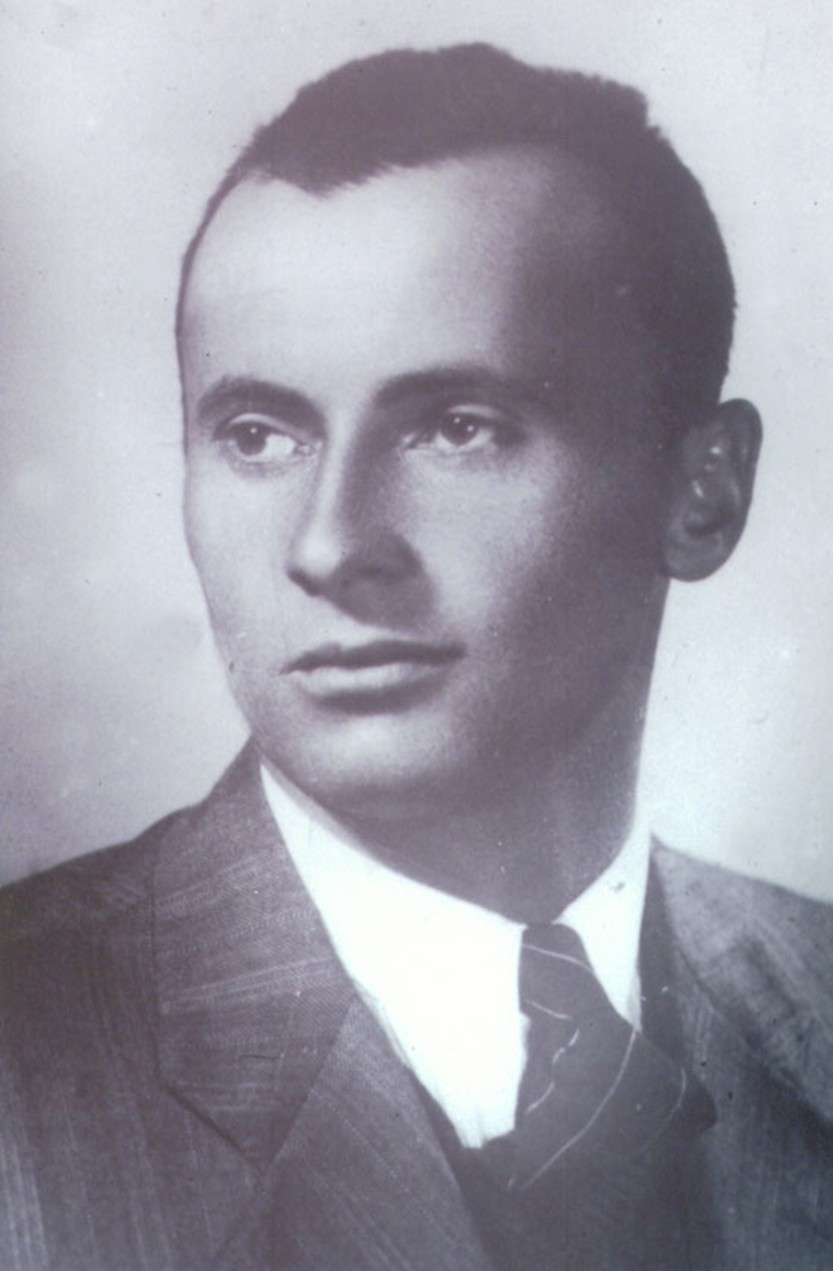


Don Andrija Majić Jr.
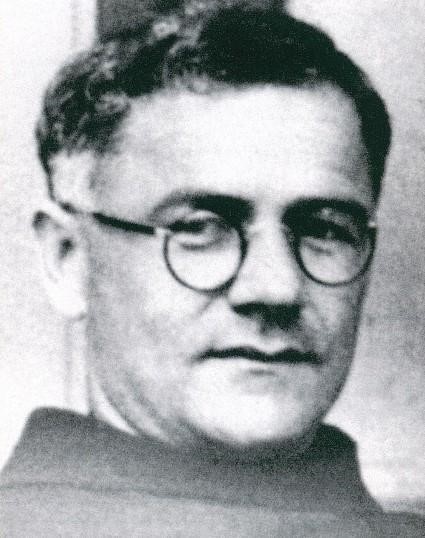
Don Andrija Majić Jr.
His breviary was found near Jazovka. Don Andrija Majić Jr. was a parish priest for 35 years in Vinica, diocese of Mostar-Duvno and Trebinje-Mrkan.
He was born on April 15, 1910 in Drinovci to father Ivan and mother Anđa, née Grizelj. His uncle was Don Andrija Majić Sr. and the younger Andrija attended elementary school in Stolac, where Don Andrija resided. He graduated from gymnasium in the seminary in Travnik and from the seminary in Sarajevo. On April 6, 1935 he was ordained a priest in Sarajevo. He was assistant pastor in Vir and Stolac and then parish priest in Trebinje and Vinica. Tito’s Partisans brutally killed him on July 15, 1945, throwing him into the Jazovka pit cave.
The weekly Glas Koncila (1990) published the article Brevijar pored Jazovke, written by Dragan Majić, nephew of the late Andrija:
“Msgr. Andrija Majić, priest of the Diocese of Mostar, born in 1892 in Drinovci, my grandfather’s brother, told me on several occasions that his nephew Andrija Majić Jr., also a priest of the Diocese of Mostar, born in 1910 in Drinovci, my uncle, was brutally killed in 1945, after the end of the war, in the village of Sošice in Žumberak Mountains.
He told me that his breviary was found and brought to the priest of Sošice at that time. This priest (apparently the late Stanko Višošević) wrote to the uncle of the murdered Msgr. Andrija, asking him what to do with the breviary, and he replied: “Keep the breviary and commend the soul of the deceased to God!” It is as if these words still echo in my soul. The late Msgr. Andrija said them with a soul and heart full of pain and sadness for his deceased nephew.
This testimony was confirmed to me in 1984 by Mr. Branko Vlabović from Oštrc, who is otherwise the father of twelve children. That year I was waiting in Jastrebarsko for some merchandise to be delivered to me, and so this gentleman learned my name in conversation with the gathered people. He immediately asked, “Is the late Andrija your relative?” When I answered that he was my uncle, he went on to say that when he was ten years old, he had heard about him, about his execution in the village of Sošice, and that his breviary had been found. At that time, this gentleman said that the breviary was found next to the pit of Jazovka itself. It is very likely that the deceased threw it in the immediate vicinity of the pit so that it would finally tell us where he ended his young, innocent life.
Although Don Andrija selflessly served God and his own suffering Croatian people, he endured his Golgotha, was tortured and thrown into the abyss of the Jazovka pit cave, where thousands of innocent Croatian soldiers, hospital patients, children, nuns and others also lost their life after the war, against all laws, by those who have been trumpeting their justice and humanity for 45 years.
Bishop Ratko Perić writes in his book Da im spomen očuvamo (2000):
“In the autumn of 1944 he was transferred to Vinka. There, during the war, many Dalmatian Partisans were coming to him. His life was not in danger. But in January 1945 he learned from a local councilman that the Partisans wanted to arrest him.
‘My cousin Don Andrija Jr., who was in Vinica – some Partisan groups demanded him to leave the parish and go with them to the forest. However, he left the parish, ran over the hill and came to Bijelo Polje. Like many other of our priests, he made up his mind and went to Zagreb via Sarajevo,’ writes Don Andrija Sr. about his nephew.
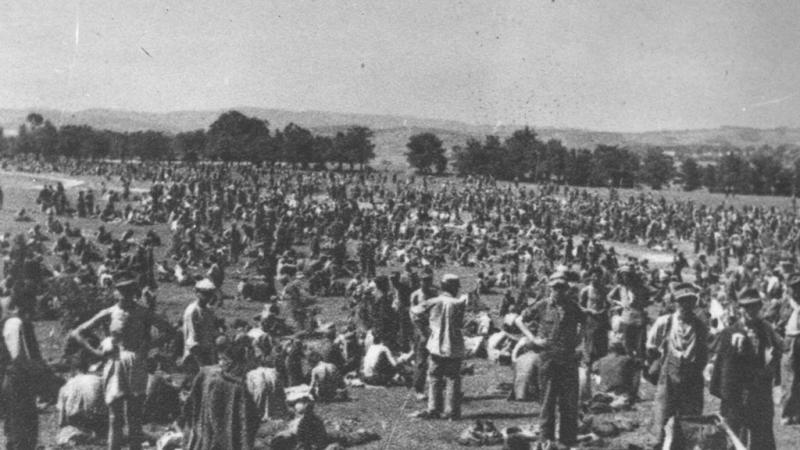
After having met Don Jozo Zovko in Zagreb, he said: ‘When the army has left Zagreb, I will make myself available as a spiritual guide, since I have many acquaintances there!’ And so it was. As a military chaplain, he held the rank of captain. On May 6, he left Zagreb for Slovenia. He crossed Austria and reached Klagenfurt, from where he was sent back to the border with the others. There the English separated the Croatian soldiers from the officers and handed over a group, including Don Andrija, to Tito’s Yugoslav Communist Partisans.
Don Andrija Sr. wrote to Don Jozo Zovko on September 16, 1972: “At the end of June 1945, his brothers at home twice received news from a military court in Zagreb that he had been sentenced to death as an ‘enemy of the people.’ His breviary was found near Žumberak, kept by a priest who I believe was from the diocese of Senj, at his request and with my permission.’
There is also this: ‘Don Andrija Majić Jr., priest, killed on July 15, 1945 between 5 and 6 o’clock in the morning and thrown in Jazovka on the road between Sošice and the village of Sopoti in Žumberak. It is said that with this priest two other priests were liquidated in the same way, allegedly all from Istria.’
His brothers were informed of his death by the same military court in September 1945.”
Finally, we present the testimony of Jela Smičiklas from Sopot, published in a special issue of Vjesnik entitled “Jazovka.”
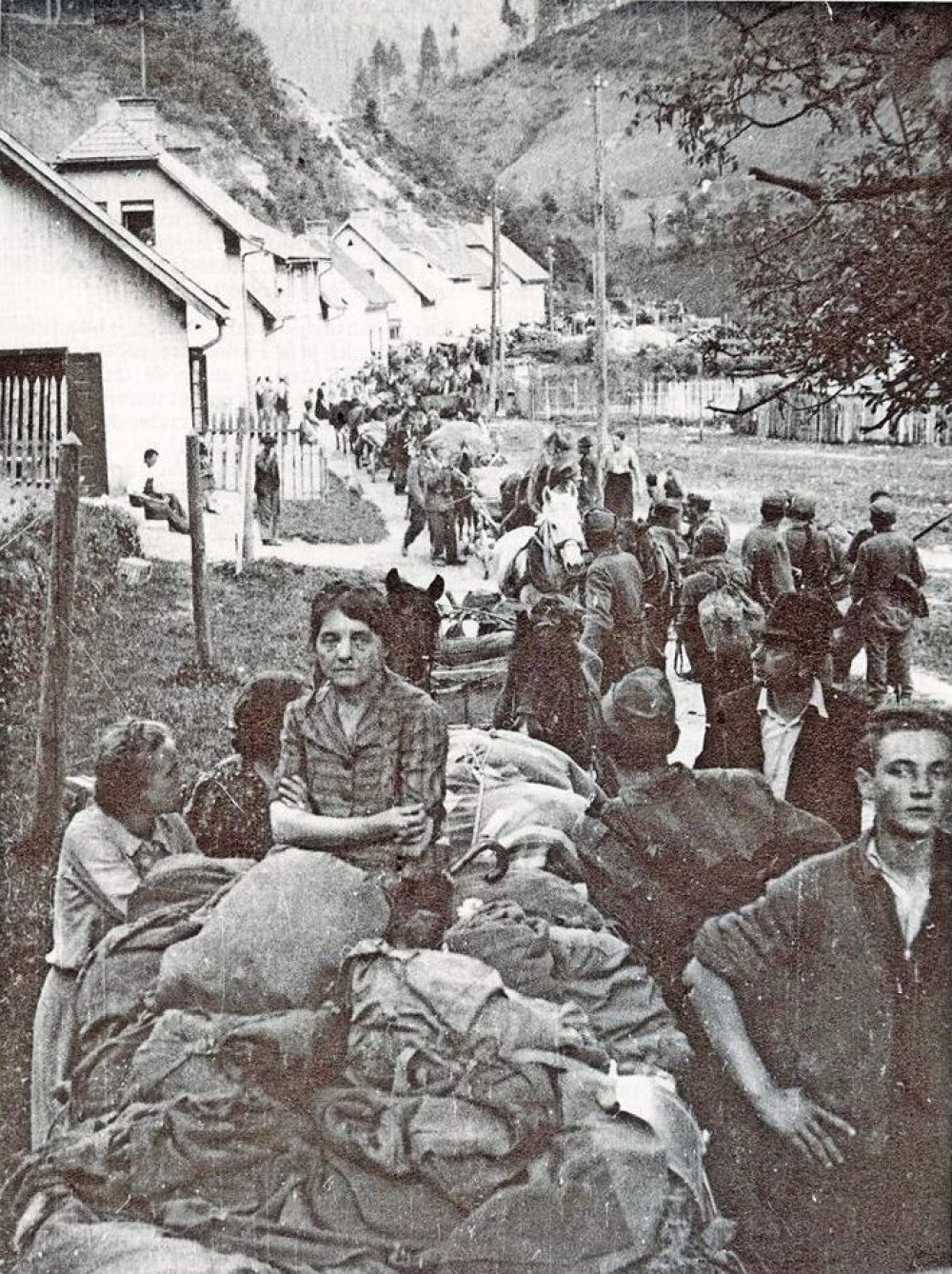
“When I went to the field, there were prayer books, pictures and rosaries on the road… I was about thirty years old at the time. They came down from Gornje Selo, and our field is near there. It was May, we were digging the corn, and they were passing day and night. There were convoys of trucks! They lined up one after the other. And it went on like that for two weeks. All we saw were bare feet sticking out from under the tarp. We were afraid to pick up anything from the road because we thought they would kill us. Later the Partisans collected everything and burned it.
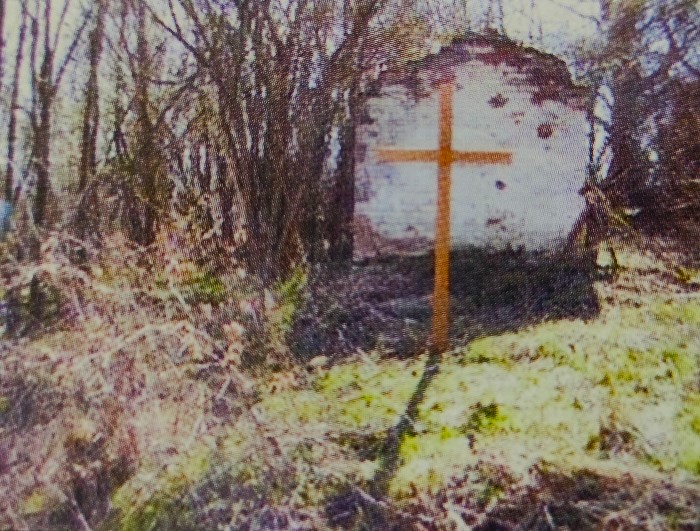
Our field was one hundred and fifty meters from the pit. A terrible groaning could be heard. When the trucks went to the crossroads, where you go up to the pit, people were chased from the field. We were told that we had to go far. Then we moved to Gornje Selo. I do not even know how we got to the village. There was a lot of fear. Everybody was afraid.
Two weeks after their departure, a very unpleasant smell spread, so that in Sopot one could not open the window in the morning. Some went to have a look. They said there was knee-deep blood around the pit. According to the stories, they were tied up like chickens so that one could easily pull the other in. They also slaughtered children. We had not seen any of it, but we knew by the screams. And the voices could be heard. Women screaming, ‘God, have mercy for I am going to die!’ It is impossible to pronounce this, it chokes me on the spot. It is impossible! No one was allowed to go near it. People still went to have a look, in hiding.”
Source:
Anto Baković, Hrvatski martirologij XX. stoljeća, Zagreb, 2007
Editorial/crimesofcommunism.net