




Testimony of Vinko Juriša
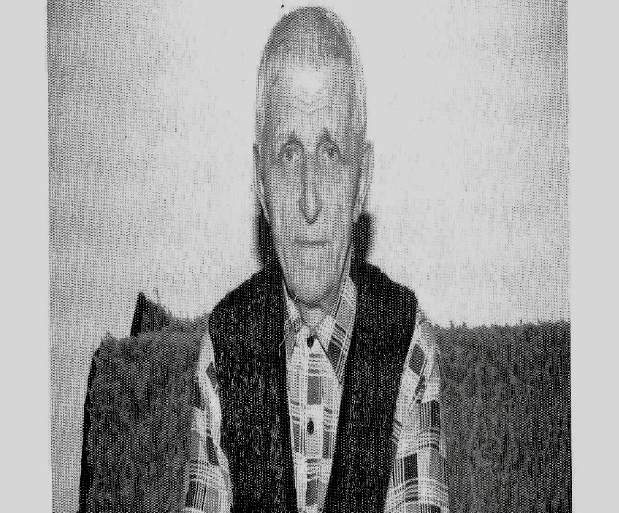
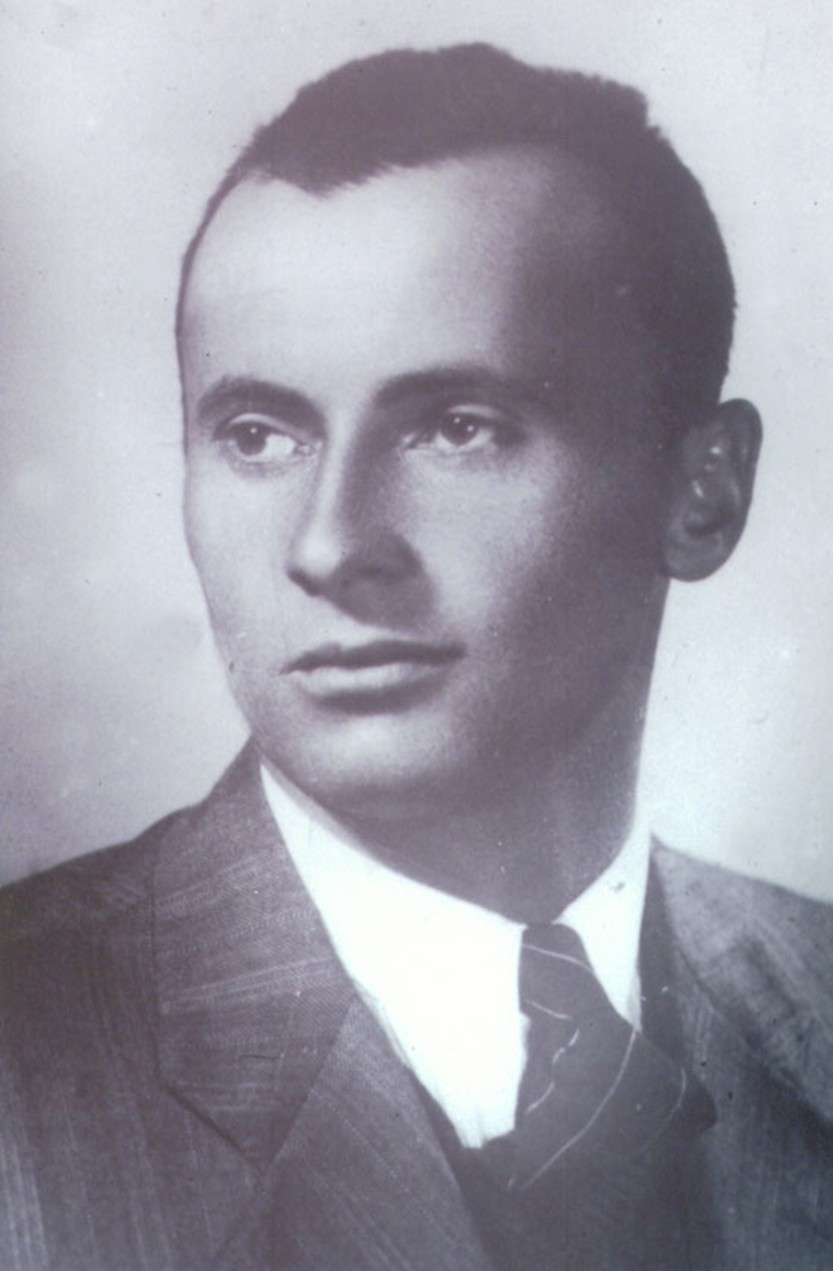
Vinko Juriša
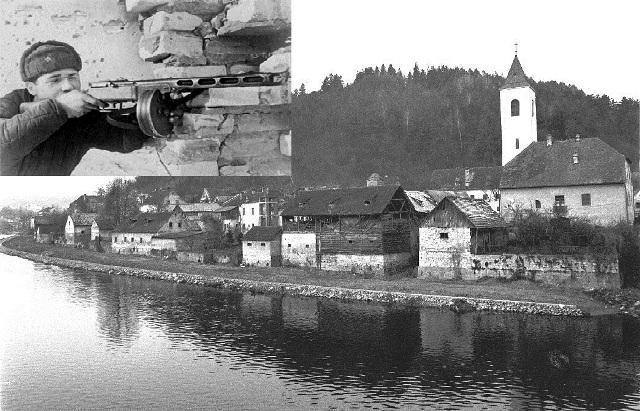
The first source of knowledge in researching the suffering of people in the area of Višnjica was the local priest Josip Pavlek, who presented the testimony of the deceased Vinko Juriša from Višnjica, who had seen the execution in the Belaš Forest with his own eyes. Moreover, some inhabitants of Višnjica confirmed with their testimonies the claims of Vinko Juriša, but also stated that another execution had taken place in this area. Thanks to these testimonies, it was possible to establish that two mass executions took place in the area of Belaš Forest in the post-war period. In the first one, about 100 people died and in the second one, about 15 people died, three of whom were exhumed by the family and brought to their birthplaces to be buried in utmost secrecy.
The testimony of Vinko Juriša
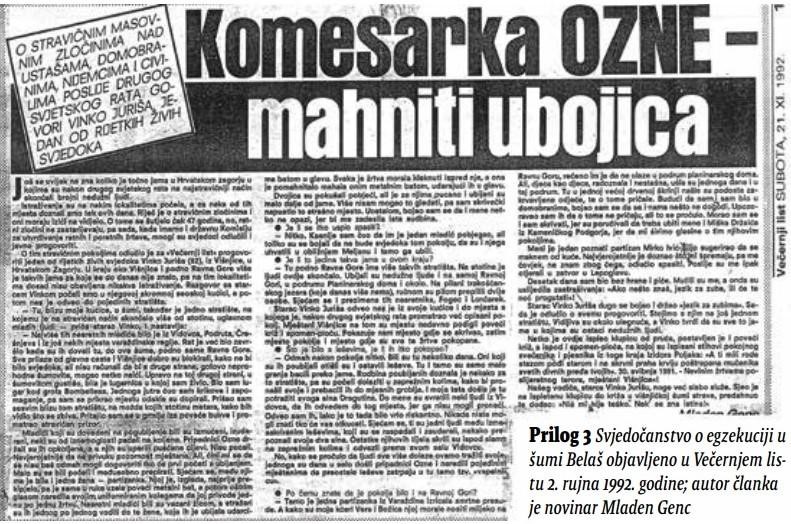
A witness to the unfortunate event, Vinko Juriša from Višnjica, who watched the execution from a hiding place, decided to break his long silence and made a statement to journalist Mladen Genc, which was published in several media outlets:
“Near my house, in the forest, there is also an execution site where more than a hundred, mostly young people died in a cruel way,” says the old man Vinko and continues,
“Most of these unfortunate young men came from Vidovac, Podrut, Črešnjevo and some other places in the Varaždin region. The war was already over when they were brought there, to this forest at the foot of Ravna Gora itself. They blocked all access from the main road and Višnjica so that there would be no witnesses, but they did not expect that anyone could get to the other side of the almost impassable forest. Exactly on this other side, in a wooded thicket, was the hut where I lived. I was a logger with Count Bombelles. One morning I heard loud screams and wails, so I crept up to where they were coming from. I came pretty close to the execution site, maybe a hundred meters, to see what was going on. I hid in the bushes behind a large beech tree and watched the gruesome scene. The young men brought for execution were tortured, beaten, some fell to their knees from exhaustion. Members of the OZNA kept them surrounded and pointed rifle barrels at them. They did not shoot, probably to avoid attracting the attention of the locals. But it seems to me that they could not immediately agree on who should kill first. They had started to argue a little bit. I remember there was one woman among them – a Partisan. She seemed to be the first one who had enough, so she picked up a large metal mallet and then, in a sharp voice, ordered her uniformed colleagues to bring her the victims one by one. The unfortunate young men were tied with wire and the guards led them one by one to this woman, who killed them with blows to the head. Each victim had to kneel before her and she waved the metal mallet wildly, hitting them on the head. Two of them tried to escape, but they were shot and killed a little further from the pit. I could not watch this any longer, so I secretly left that terrible place. Finally, I was afraid that someone would not notice me because I would meet the same fate.”
Has anyone been able to save themselves?
“No. Later I heard that a young man managed to escape from them, but they were so afraid that there would be no witnesses to the massacre that they captured him too in nearby Meljan and killed him there.”
Is this the only such pit in the area?
“There are several such execution sites at the foot of Ravna Gora. Hundreds of people died here. They were killing people on Ravna Gora also. Fogec and Lončarek were sawed off with a saw.”
The old man Vinko Juriša led us from his small house to the place from which he observed the already described slaughter after World War II. The inhabitants of Višnjica have erected a large cross on this spot and placed a memorial plaque.
He shows us the place where he hid, then the place of the massacre and the place where all these victims were buried.
What happened to the bodies, did anyone bury them?
“Immediately after the massacre, nobody. They lay there for several days. Those who had killed them were gone and left the bodies. Here and there they threw a few branches over the pit. The relatives of those killed somehow learned about the execution site and began to search for their relatives with wagons and take them to the local cemeteries. My aunt also came there to look for her son Dragutin. Some people from Vidovac came by to take me to this place because they could not find it. I took them, although it was very risky at that time. You never knew who would betray you. I remember that these poor people somehow recognized their two sons among the massacred bodies that were decomposed and stinking. They hid the remains of their corpses under straw on a cart and drove them to their village of Vidovac. However, as word spread that more and more people were coming here to look for the bodies, one day members of the OZNA came to the village and ordered some villagers to bury the remaining bodies in the pit, the so-called ‘vapelnica’ (limestone factory, t.n.). Since I was in the Home Guard myself, they started threatening me and Miško Držaić. Then I began to hide from them. They said that we should be killed because we were spreading rumors about their massacres. A well-known Partisan, Mirko Ivić-Šilje, suggested that I leave the house. Probably he had found out what they were going to do with me, so the man decided – I do not know why – to save me. After that, however, they still sent me to Lepoglava prison. I was without food and drink for about ten days. They tortured me and then the intimidation came , “If you know anything, shut up or the night will eat you!”
Source:
Zdravko Jakop, Povijesnom istinom do bolje budućnosti, Svjedočanstva, Lepoglava, 2017.
Editorial/crimesofcommunism.net