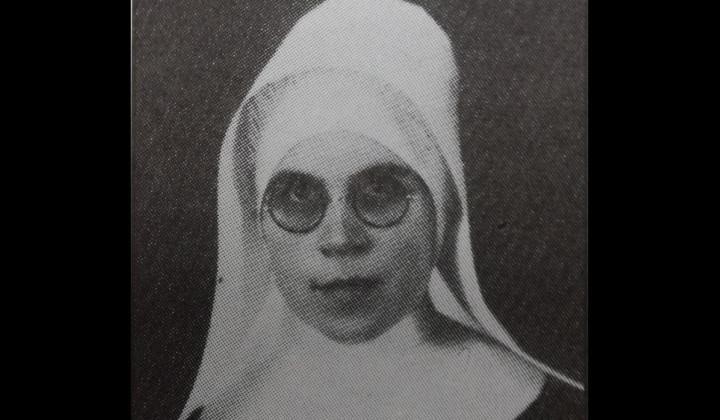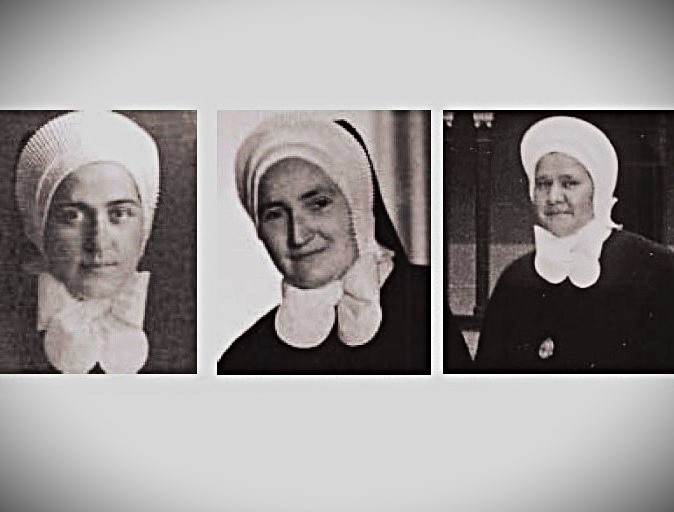



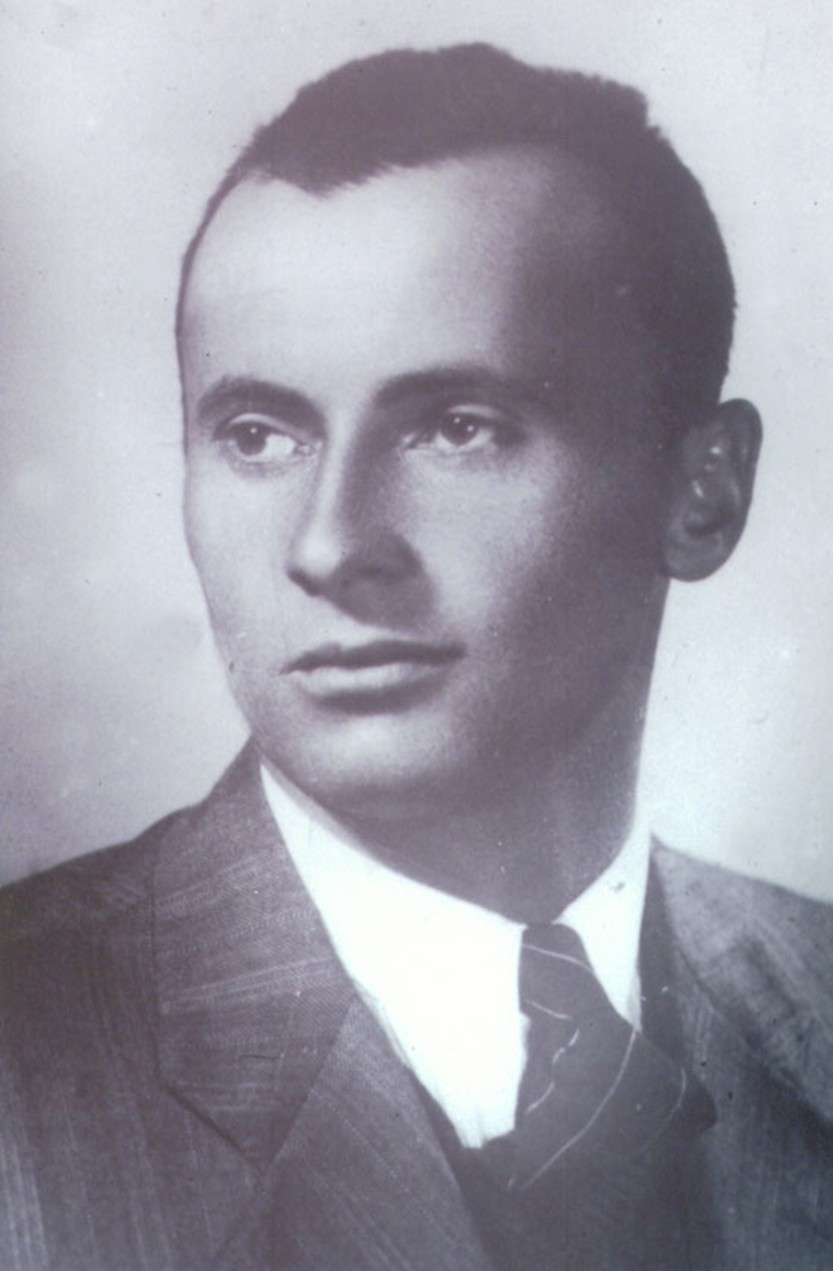



Sister Konstantina Roza Mesar
Konstantina Mesar
She was born on October 26th, 1907 in Tugonica, Marija Bistrica, to father Valentin Stubičan Mesar and mother Marija, née Habazin. She was baptized on October 27th, 1907 in the parish of the Assumption of the Blessed Virgin Mary in Marija Bistrica, Zagreb Archdiocese. She joined the order on July 25th, 1927. She took her temporary religious vows on November 21st, 1929, and her lifelong vows on November 21st, 1932 in Zagreb. She worked in Šibenik, first in the priest’s kitchen, and then she performed the same duty in the Šibenik hospital. She worked in an orphanage in Split for a while, and then, overcome by illness, she went to Zagreb. After recovering, she worked at the hospital in Vrapče, where she remained until her martyrdom. On the night of May 15th, 1945, at the age of 38, partisans took her away and threw her into the Jazovka pit.
Everything that has been officially written about her martyrdom can be found in a large two-book monograph entitled Sisters of Mercy (L, II). The first volume reads:
On the night of May 15th, 1945, three sisters: Sister Geralda Jakob, Sister Konstantina Mesar and Sister Lipharda Horvat, were taken in an unknown direction and they were never heard of again. According to a report by an “unknown” person, who delivered the news to our newspaper in 1990, they ended their lives in Jazovka.
The Chronicle of the Sisters of Mercy says the following about sister Konstantina:
For three years, she took care of the kitchen for priests and young priests of the Šibenik diocese. After two more years of working at a women’s orphanage in Split, she went to Zagreb for treatment. She was coughing up blood… The disease progressed. She had already received her last rites. A burning desire for life and work, and a great novena to the Mother of God of Pompeii restored her health and gave her new strength. In October 1940, she found herself in a new line of work at Vrapče Hospital. She cared for the poor and unloved patients. She cared for them like a good mother. She was clean, tidy, precise, and kept the ward in the best order. She got along well with the head sister, listened to her and helped her with everything. She respected everyone, especially the older sisters. She maintained order and conscientiously performed common prayers.
According to several elderly people, a number pf nuns ended up in Jazovka during the days of May and June 1945. Among them are three sisters from Vrapče. These were sisters Konstantina Mesar, Geralda Jakob and Lipharda Horvat. OZNA knocked on their door and took them away.
Why did the sisters end up in Jazovka?
They say that the partisans trusted the nuns during the rule of the Independent State of Croatia. If a wounded man came, and the nuns noticed that he was not a Croatian soldier, they would not complain and cause problems. Instead, they bandaged his wounds and treated him. When the unknown wounded man recovered, his comrades – his brothers-in-arms – would come at night and take him to the so-called freedom, into the woods. The nuns never reported it.
Then came the new government, communists, and partisans, and what happened?! The nuns bandaged the wounds of a wounded home guard. Someone reported it because comrades demanded of everyone to spy. OZNA came and took the wounded men and the sisters to Jazovka. The sisters allegedly justified themselves by saying they tended to the partisans in the same way. One older lady, Marija Movrić, testified that comrade captain then told the sister: “Thank you for treating and hiding the partisans, but for hiding and treating the Ustasha, you will all go to Jazovka!”
Sourcers and literature:
Report from the Chronicles of Sisters of Charity. Sisters of Charity, /. Zagreb, 1996, pg. 236.
Baković, Anto: Priest Victims of War And The Postwar Period, Zagreb, 1994, pg. 239.
Editorial board/crimesofcommunism.net