




Prisoners of the Way of the Cross
Maribor
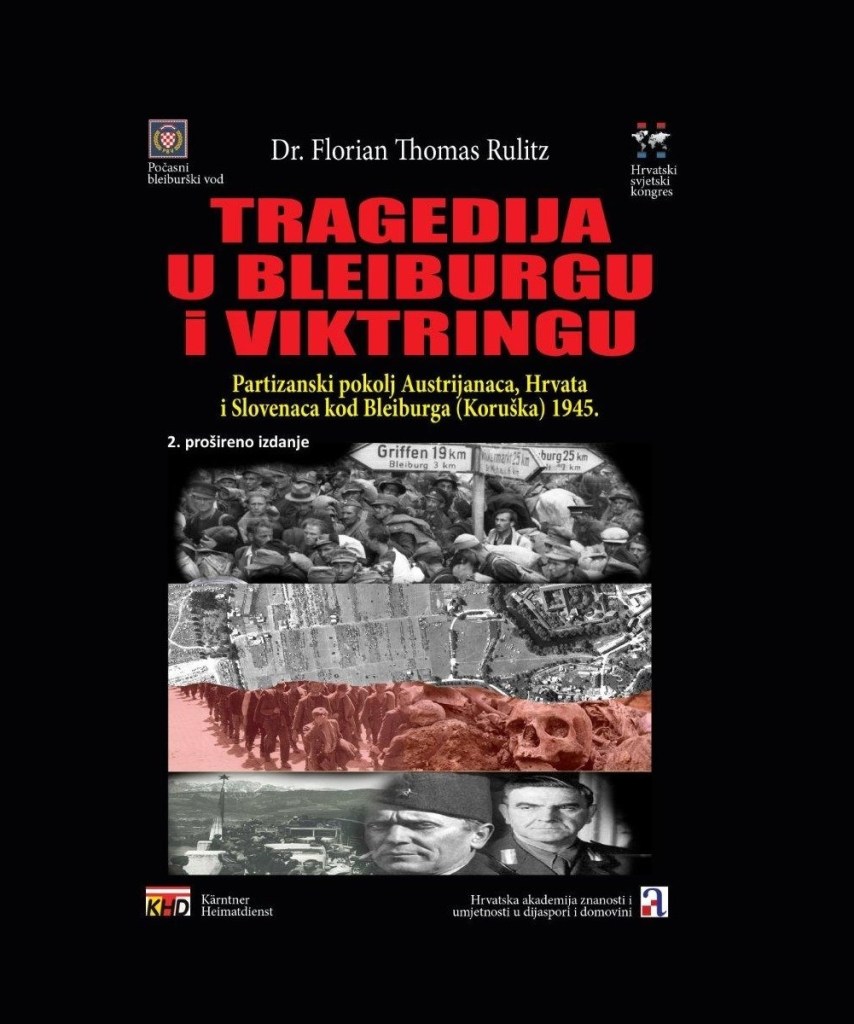
There are numerous testimonies of surviving witnesses about the murders committed by Tito’s Partisans in 1945 near Maribor. Witness No. 30, for example, who was forcibly recruited by the Partisans, testified that he was present at the massacre committed by the 6th Proletarian Brigade from Bosnia on the 7th kilometer of the road from Maribor, where anti tank ditches are located. They took prisoners and refugees there in groups of 100, stripped them, took away their watches, rings and all valuables. They were tied with wire on their backs and then loaded on trucks with the sign of the Red Cross. The witness was one of the guards who followed one of the said trucks. When they arrived in the neighboring forest, they were confronted by a dozen people with guns ready to fire.
“At that hour – said the witness – I heard the firing of machine guns and automatic revolvers, a scream and a cry for help. When I came to my senses from the vibration of the truck ride, I heard someone shouting, ‘Let the first three descend, let the others wait.’ As soon as the first jumped out, they were pelted with blows, sticks and kicks. They hit them so cruelly on the head, face and stomach that I could not watch this horror any longer. Some of them had their eyes sticking out of their split skulls. Among the executioners were minors between 12 and 15 years old, women and armed civilians. Stunned by this horrible sight, I did not even notice an anti tank ditch, 3 meters deep and 4 meters wide, the end of which could not be seen to the left or right. It was half filled with corpses, three of them tied one on top of the other, upside down, disfigured, and some of them were missing half of their heads, they were naked. Some lay at the bottom of the trench, buried with 5 or 6 rows of murdered men, whimpering, ‘Kill me, for I am still alive.’ The executioners cynically sneered, ‘We do not kill anyone, we want everyone to live.’ I was stunned. The first three I followed in the truck were half dead. They were brought to the edge of the ditch. Then the other three, and so on. Some who were still conscious cried out, ‘Long live Croatia.’ Others prayed, ‘My God, Jesus and Mary, help me.’ Among the executioners, whispers, mockery and laughter. They were pushed, from behind, to the edge of the ditch. There the executioners waited, their feet propped up on the corpses. One gave the order: ‘Shoot.’ The executioners shot in the back of the head and at the same time pushed more corpses into the ditch. In this way, day after day, the trucks were emptied…”
“The commander asked the soldiers of the guard – according to the same witness – if they wanted to shoot, but ‘only a few of them came forward,’ perhaps some Serb who was a Chetnik until yesterday. They were killing 15 to 20 people at the time.”
“I had to load the rifle of the battalion commander Božidar Minić with three other men,” says this witness. “We were loading the rifles for him. He counted the bullets, and in the evening he declared that he had killed 2,040 people. When political commissar Petar Milenković saw this, he boasted that he had killed about 400 people, and his deputy Petar Kundak added, ‘My commander, I killed no less than twice that many.’”
The next day, others continued killing. It was the third day of killing and 30 Red Cross trucks were in constant use to bring prisoners. On the fourth day, the unit to which Witness No. 30 belonged received orders to bury a trench full of bodies.
“I wanted to check the length of the trench, but a soldier told me that I did not have time because it would take me more than 20 minutes to go around it from one end to the other, because the trench was more than 2 kilometers long. I asked him if the trench was full of bodies in all parts as it was here, and he replied that it was probably everywhere. In one place alone, 11 women lay naked, tied with wire and tortured before being shot. They heroically endured and cheered for Croatian national independence. I believe the person who told me this, because he was a Partisan like me. My unit dug the trench with the help of other units of our brigade. Finally we got out of the trench and reached Maribor, 7 kilometers away. According to the commander and the commissar, more than 24,000 people were killed there.”
Source:
Vinko Nikolić, Bleiburška tragedija hrvatskoga Naroda, Munchen-Barcelona, 1976
Editorial/crimesofcommunism.net