




Mass gravesites on Stražnik near Samobor
Stražnik
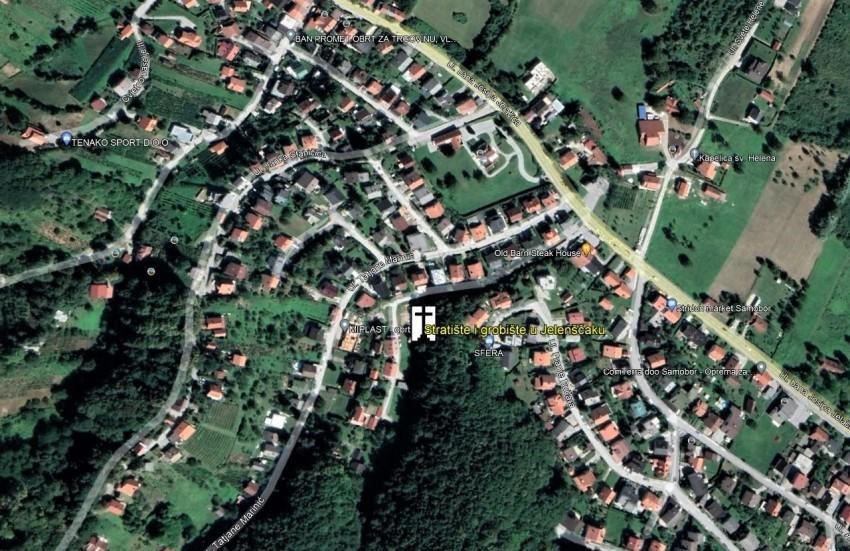
Mount Stražnik is located in the western part of Samobor, i.e. in the northeastern part of the Samobor mountain range. Seen from the town, it has the appearance of a large wooded hill (broadleaf trees and coniferous trees), on the slopes of which, under the forest, there are today the settlements of Stražnik and Sjeverno Naselje (Sveta Helena). On the edges of the forests, in several places and at the very top, large gray areas can be seen, which are actually wounds in the landscape. There used to be limestone quarries and sand pits here. They are signs of great neglect of the environment and the destroyed beauty of the landscape.
The place name Stražnik is derived from the noun straža (guard) and the verb stražariti (to keep watch). Namely, at the time of the Turkish raids (from the 16th to the 18th century), there were fixed stations, camps, in certain strategic places, where the guards stayed and changed. Stražnik is such a place.
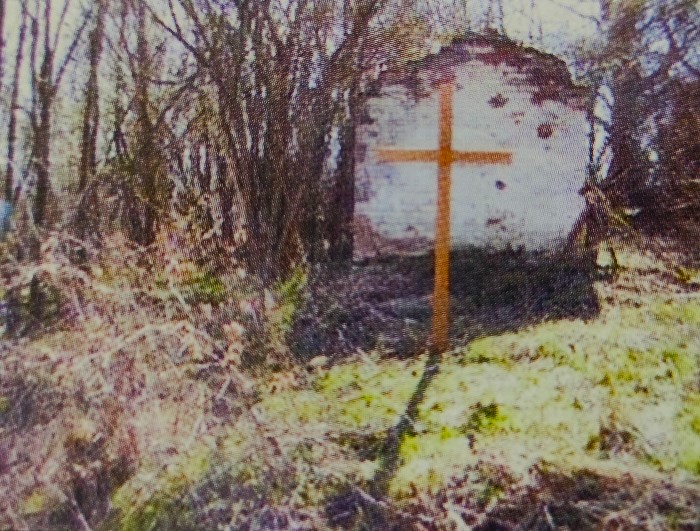
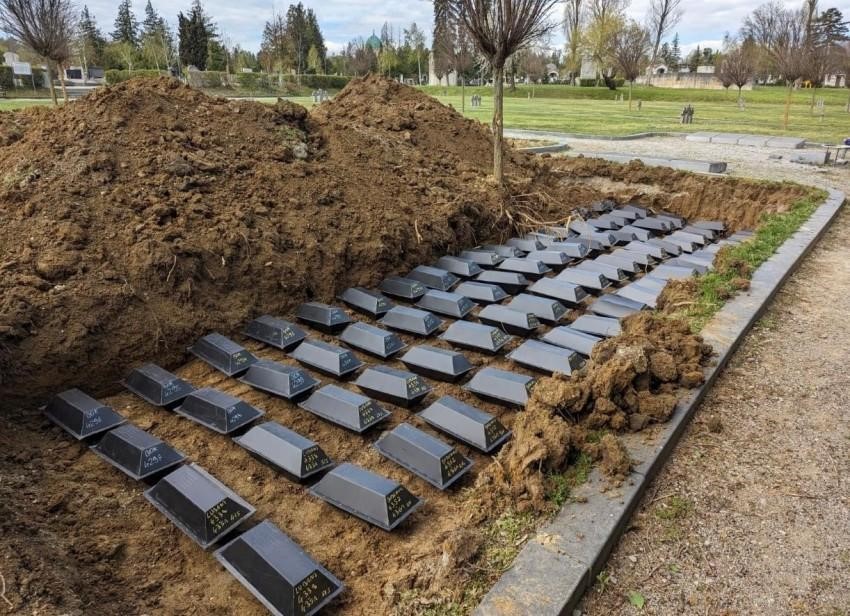
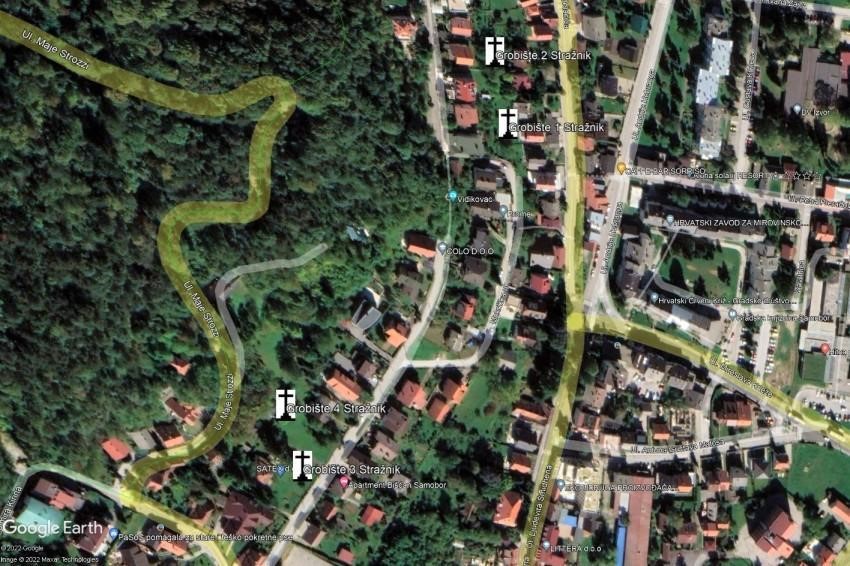
Not far from the town center, on the winding road leading through the forest to the village of Vrhovčak, a little further after the second bend, on the right side of the road, witnesses testify and show the location of a pit 3 by 4 meter in size, the first execution site and burial place for captured Croatian Home Guardsmen and civilians killed by Tito’s Partisans. Further along the path towards the plateau called Brezina, about thirty meters from the plaque with the inscription “Pod Brezinom,” there are other gravesites. It would be difficult to find the skeletons by digging, as trees with strong roots have grown there in the meantime. There are two larger cemeteries, 3 by 3,5 meters in size and buried up to 40 cm deep.
The victims of the Communist Yugoslav regime were buried by the citizens of Samobor, mainly firemen and even respected people like Dr. B. and L. in the so-called labor actions, forced labor organized by the Yugoslav Communist authorities to cover up the crime. According to witnesses, at least thirty people were killed and buried in Stražnik. Some witnesses, fourteen-year-old shepherds at the time, state that they heard moaning and wailing from the direction of the execution site. They also saw the successful escape of the two victims and the subsequent unsuccessful chase.
In Stražnik, the “murdered guard” still keeps watch without shift, waiting for a decent Christian burial.
Sources and literature:
Stjepan Herceg, Samobor mali Bleiburg 1945., Samobor, 1996.
Editorial/crimesofcommunism.net